Kohle und Stahl
The game in pictures
Explore eight selected years between 1807 and January 1933. These screenshots show different stages of the game, from the early family business to the demands of industry, alongside the people who take responsibility for it.
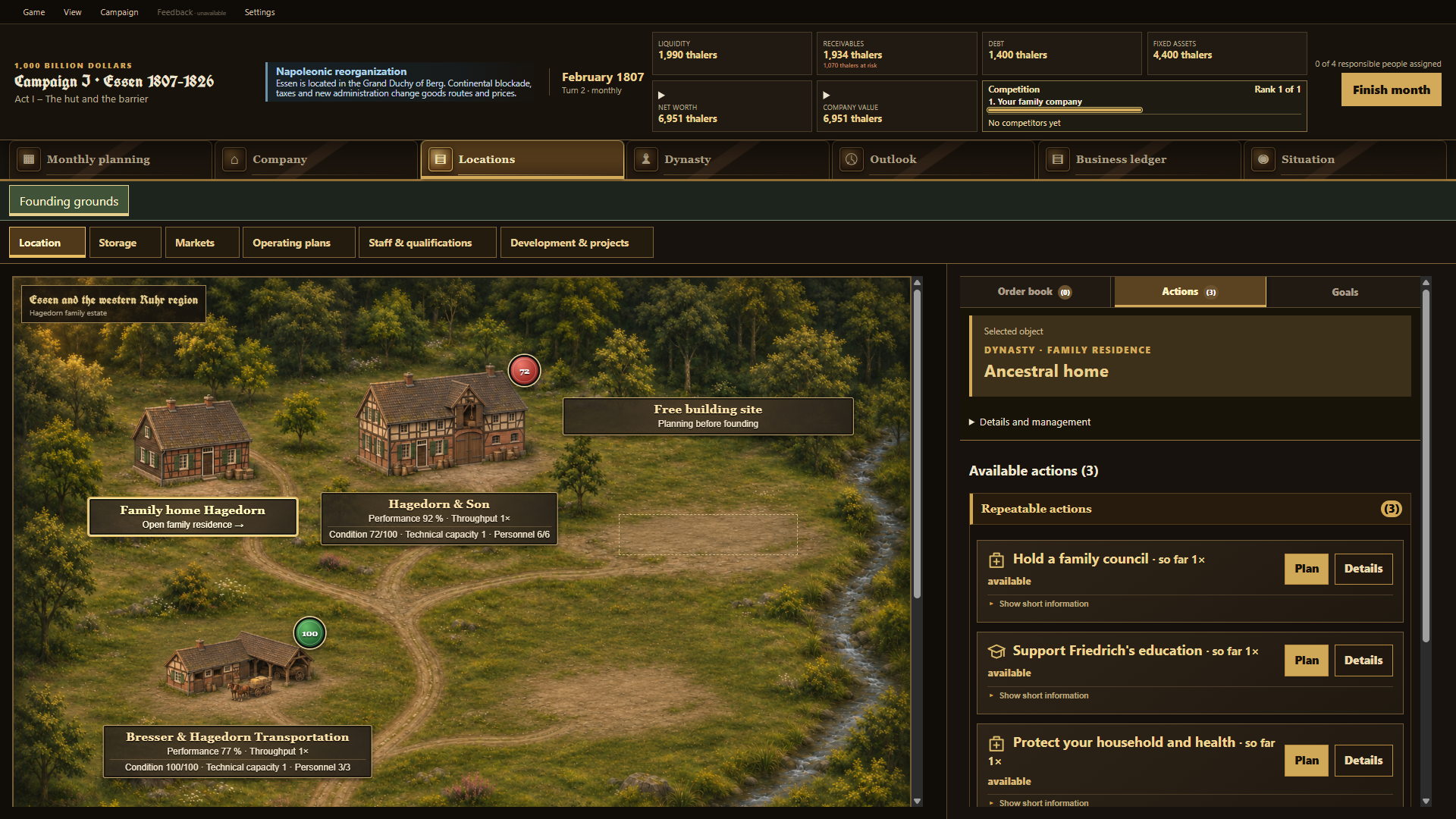
1807
A family business takes shape
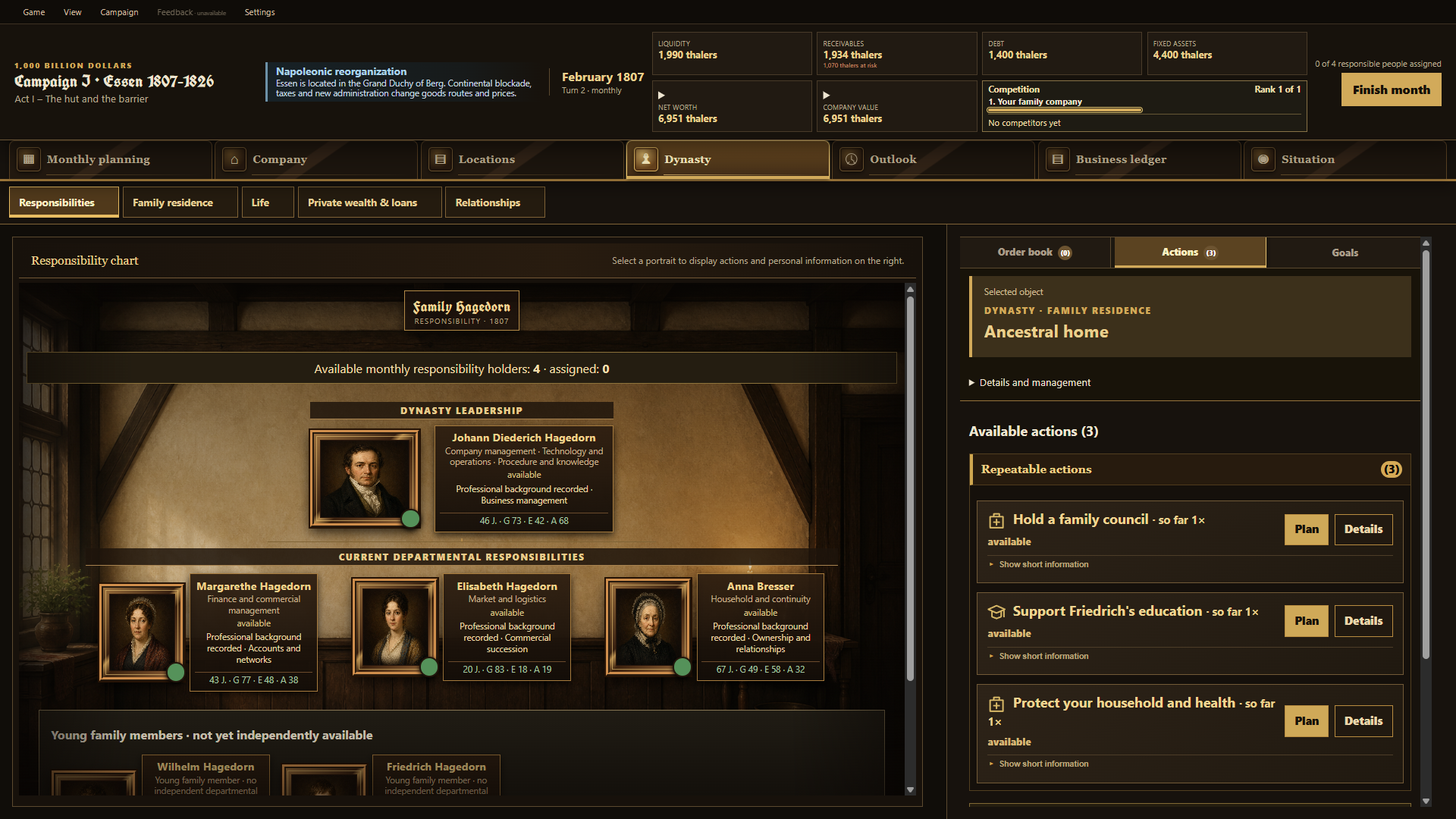
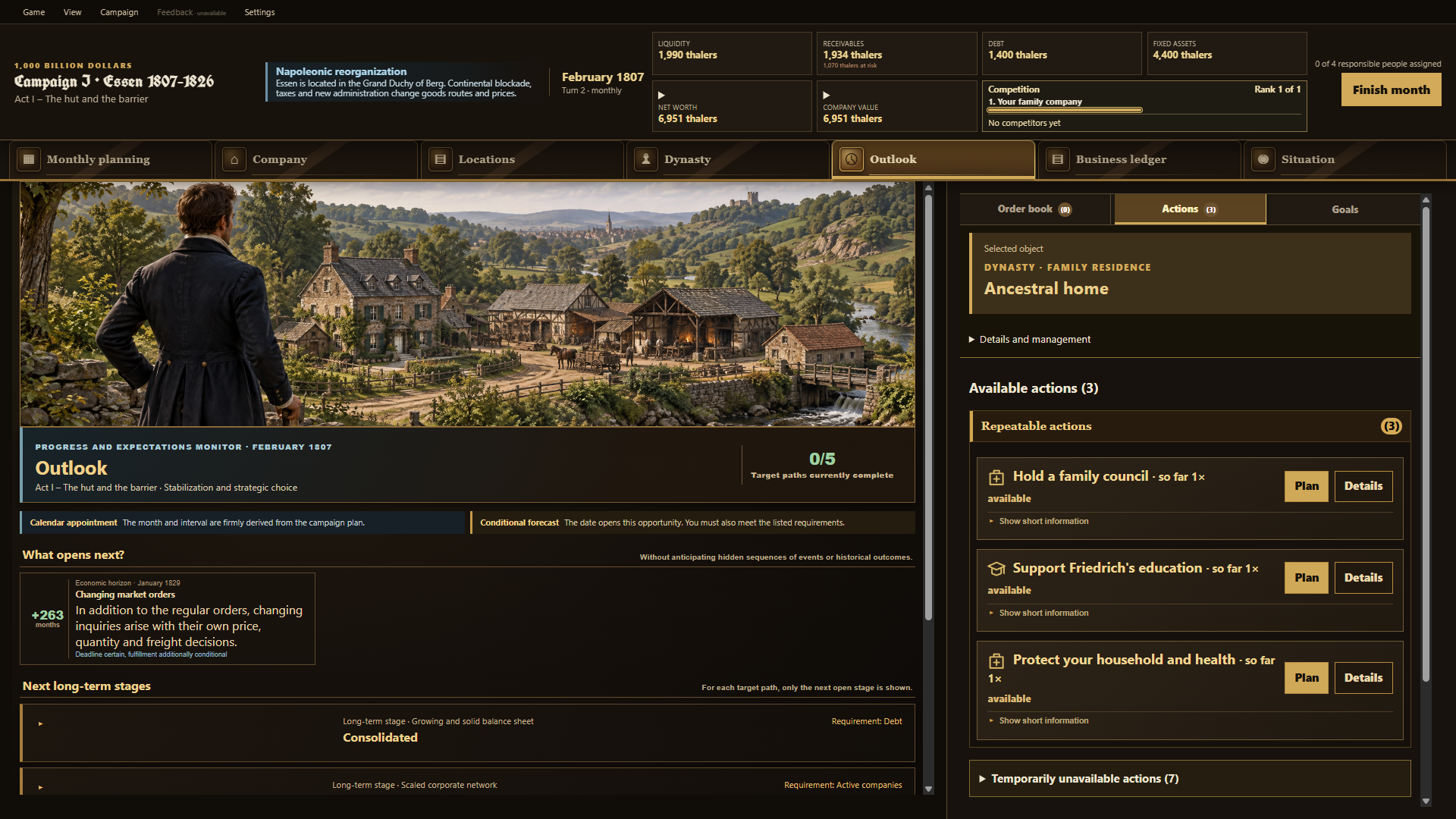
Essen, 1807. The family home, trading house and haulage business stand close together. Early orders need to bring in money, while expansion and new ventures compete for the same limited funds. Responsibilities are shared within the family, and the next generation is still growing into its role. There is room for more on the site. What takes shape there depends on the plans made in the months ahead.
1827
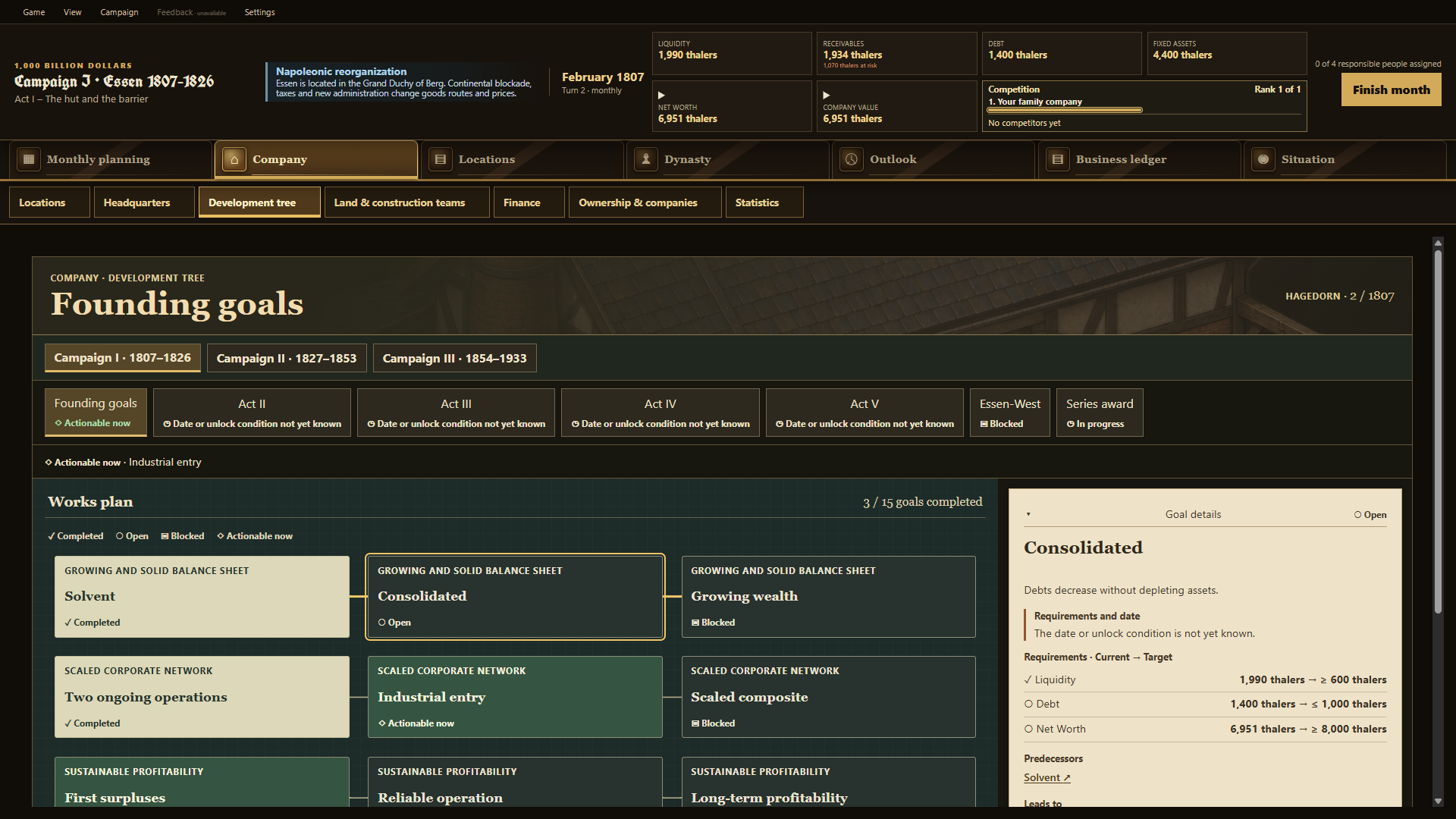
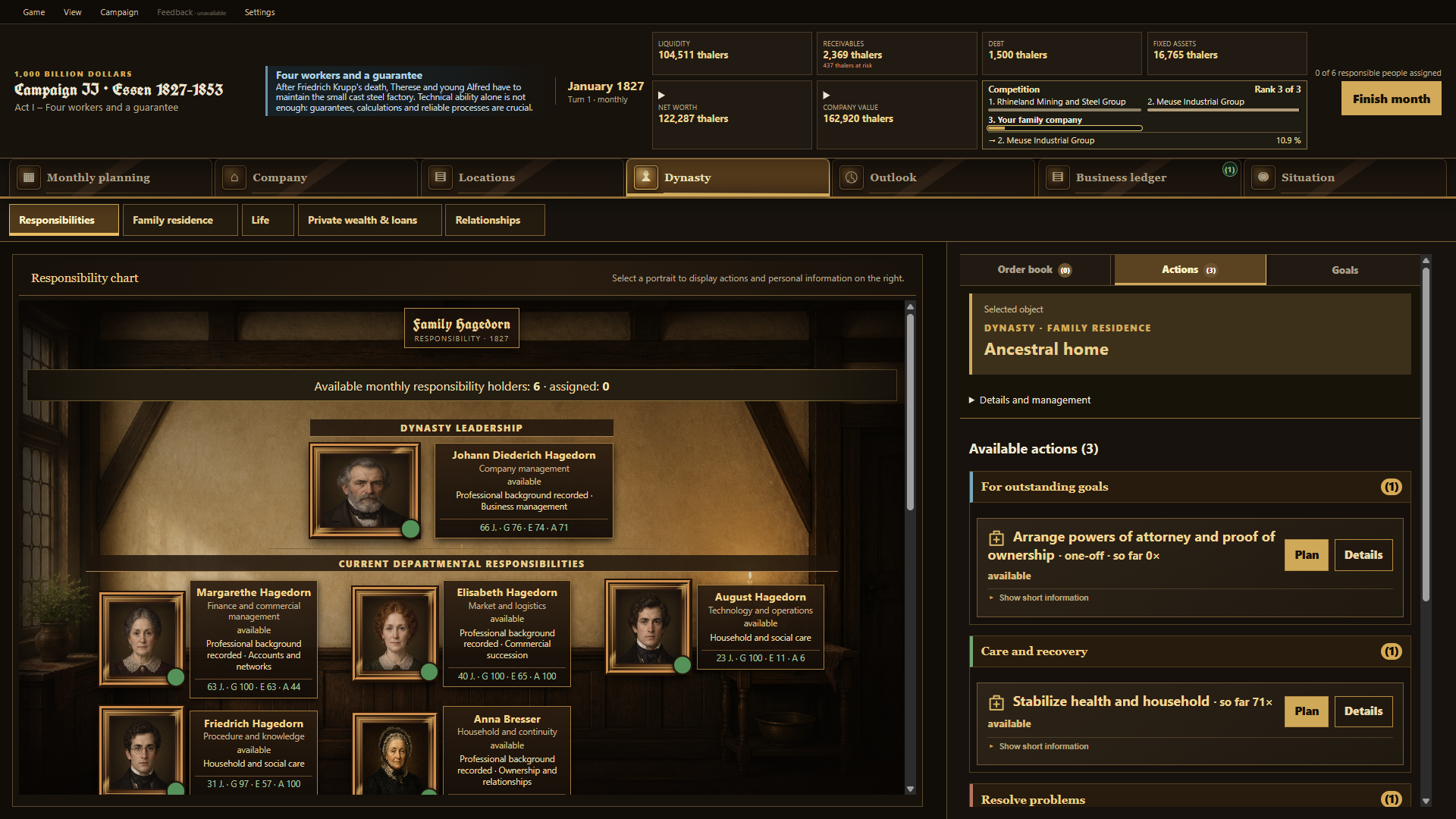
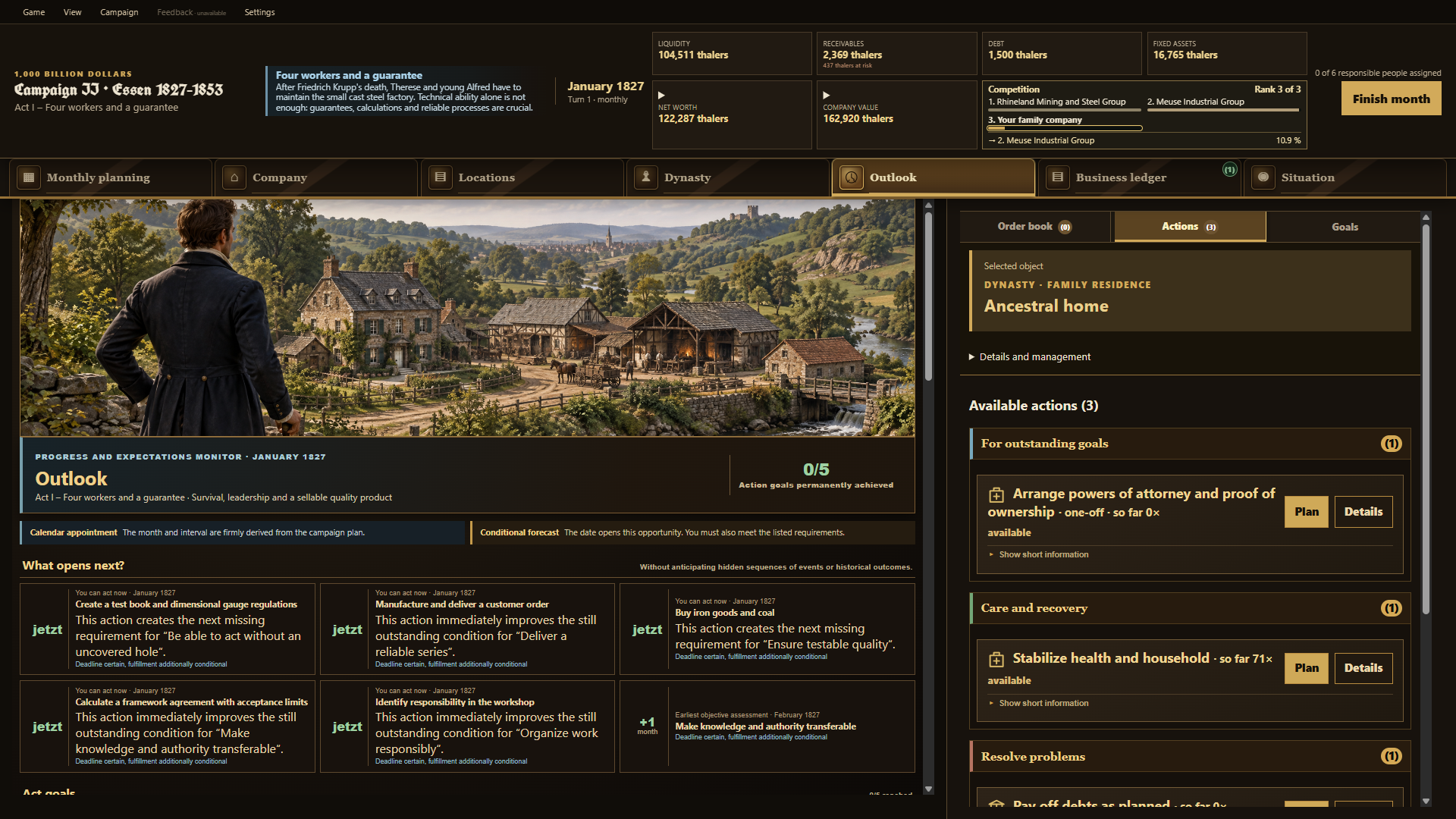
Making production work
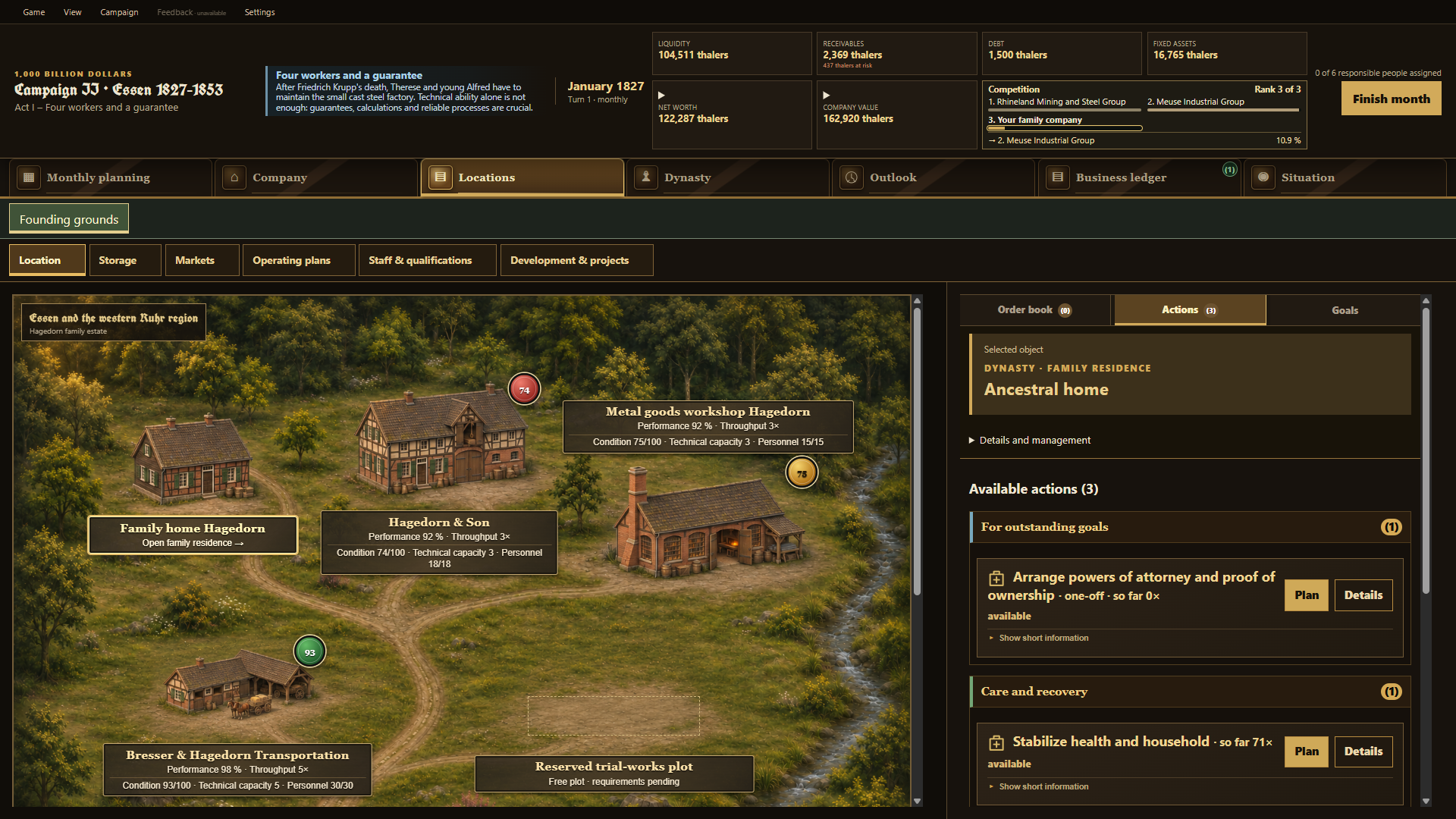
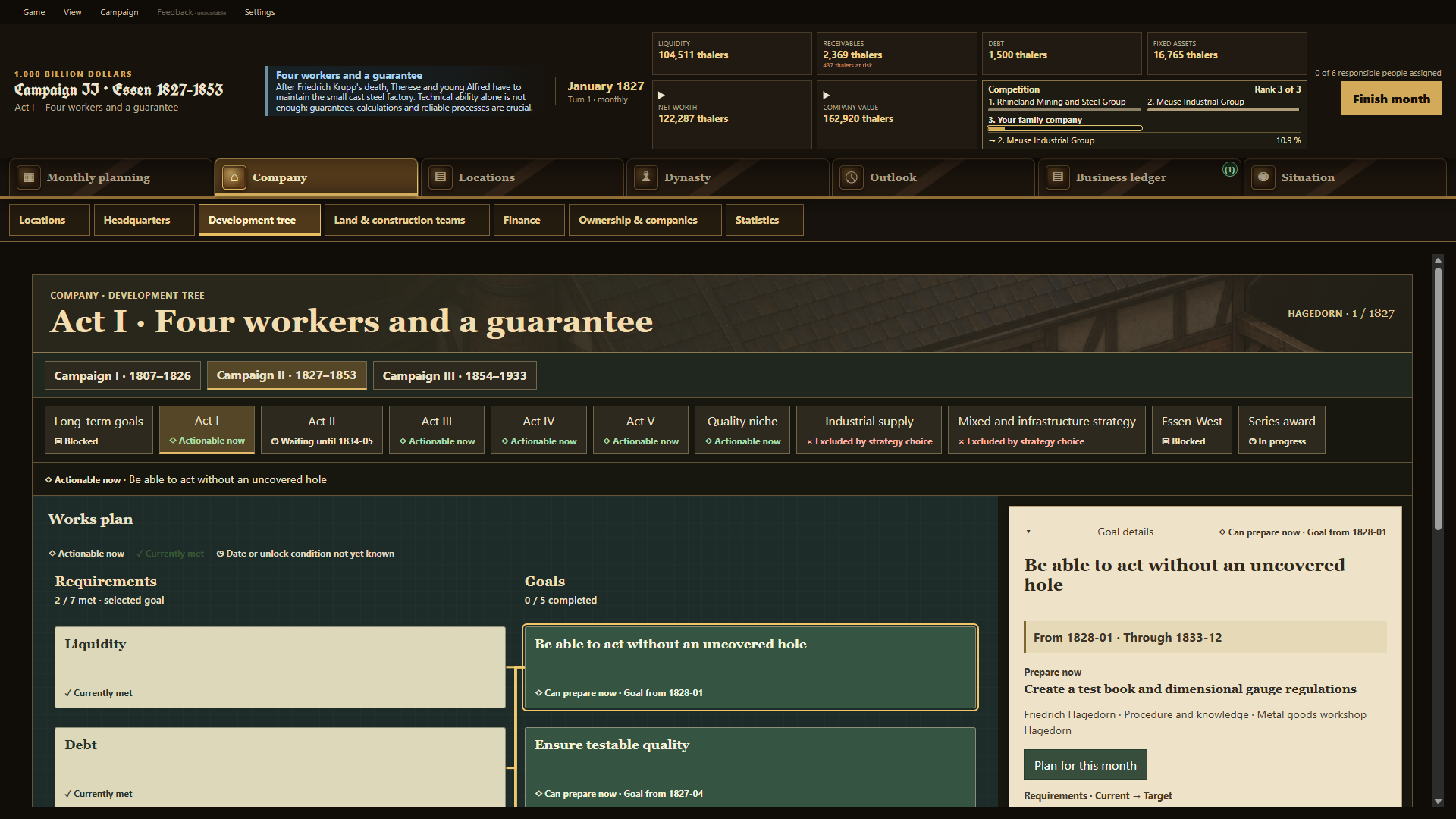
Production brings new demands to the family business. Raw materials, people and practical knowledge have to come together. An investment helps only when the company can make use of the capacity it adds. The development tree sets out the next goals, while the family must consider who has the knowledge to pursue them and who will take responsibility.
1854
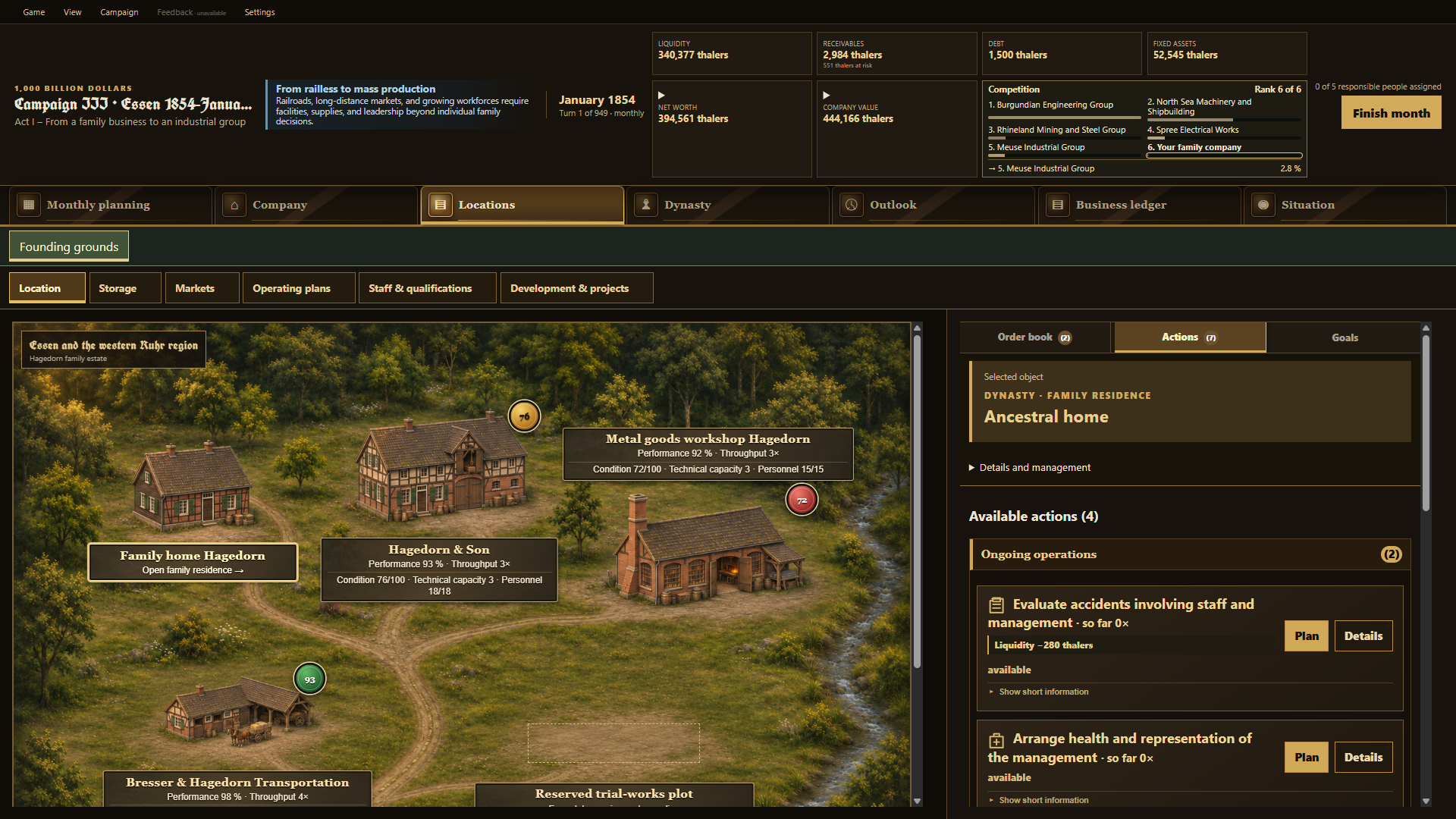
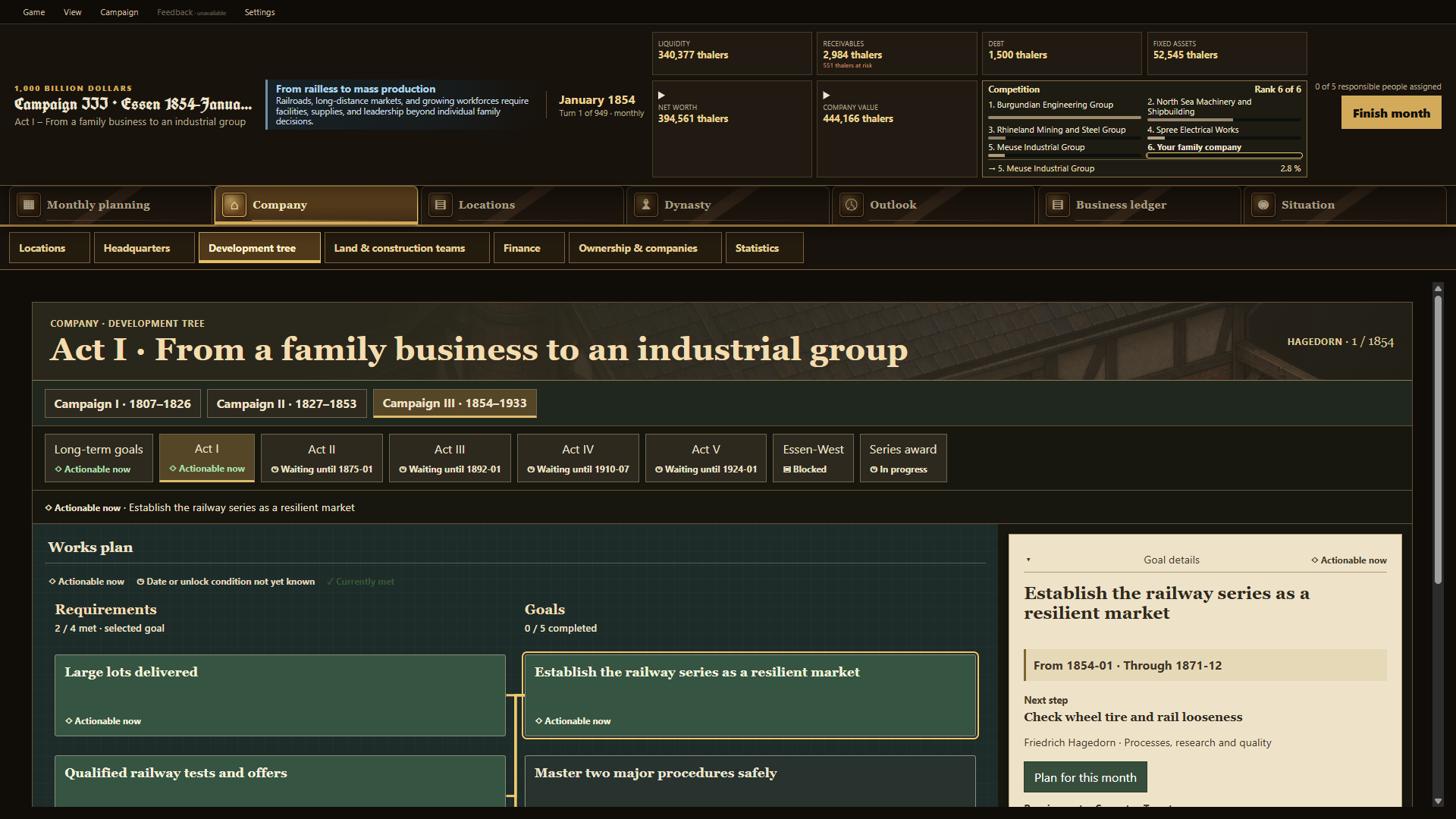
Choosing how to grow
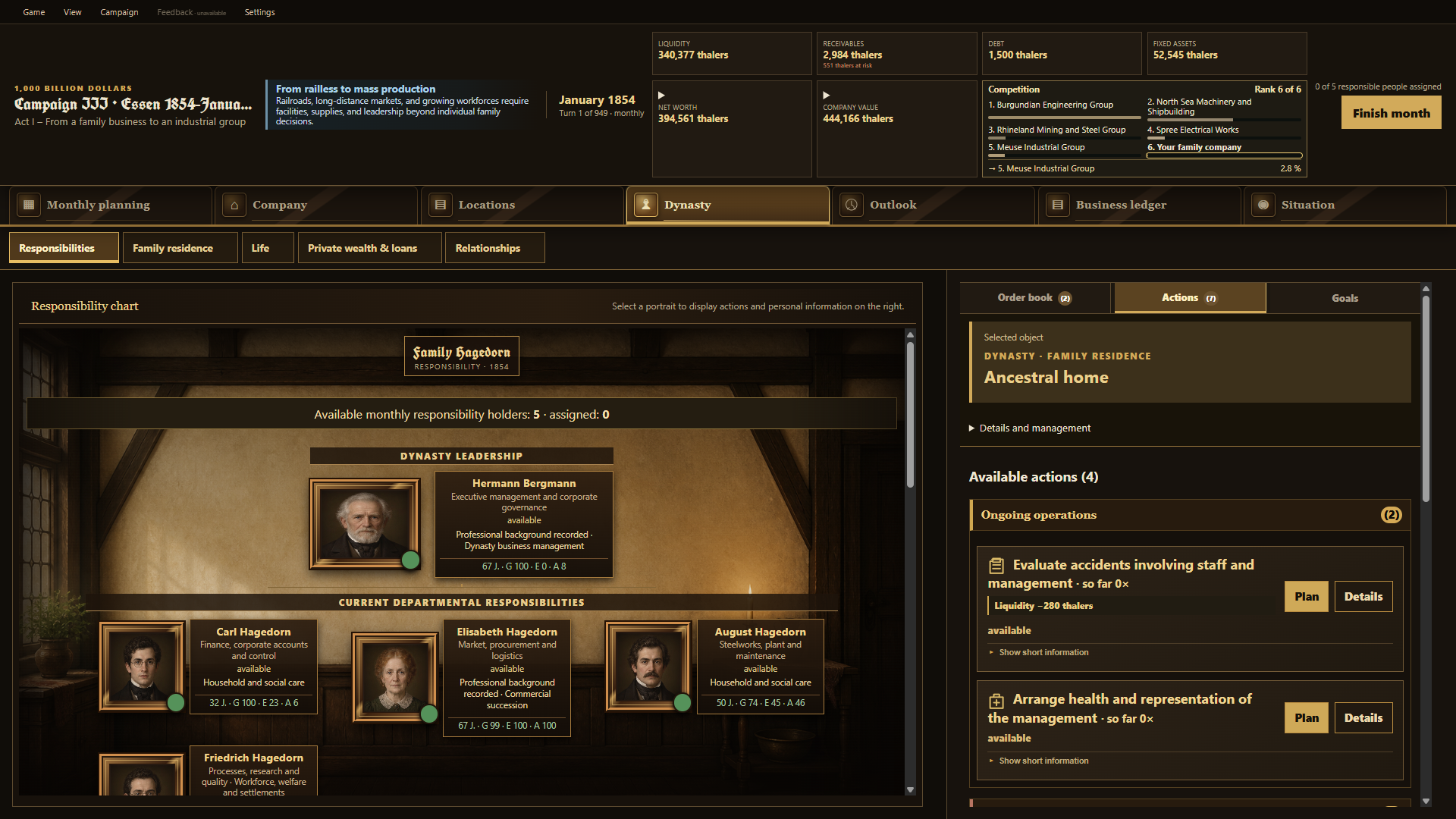
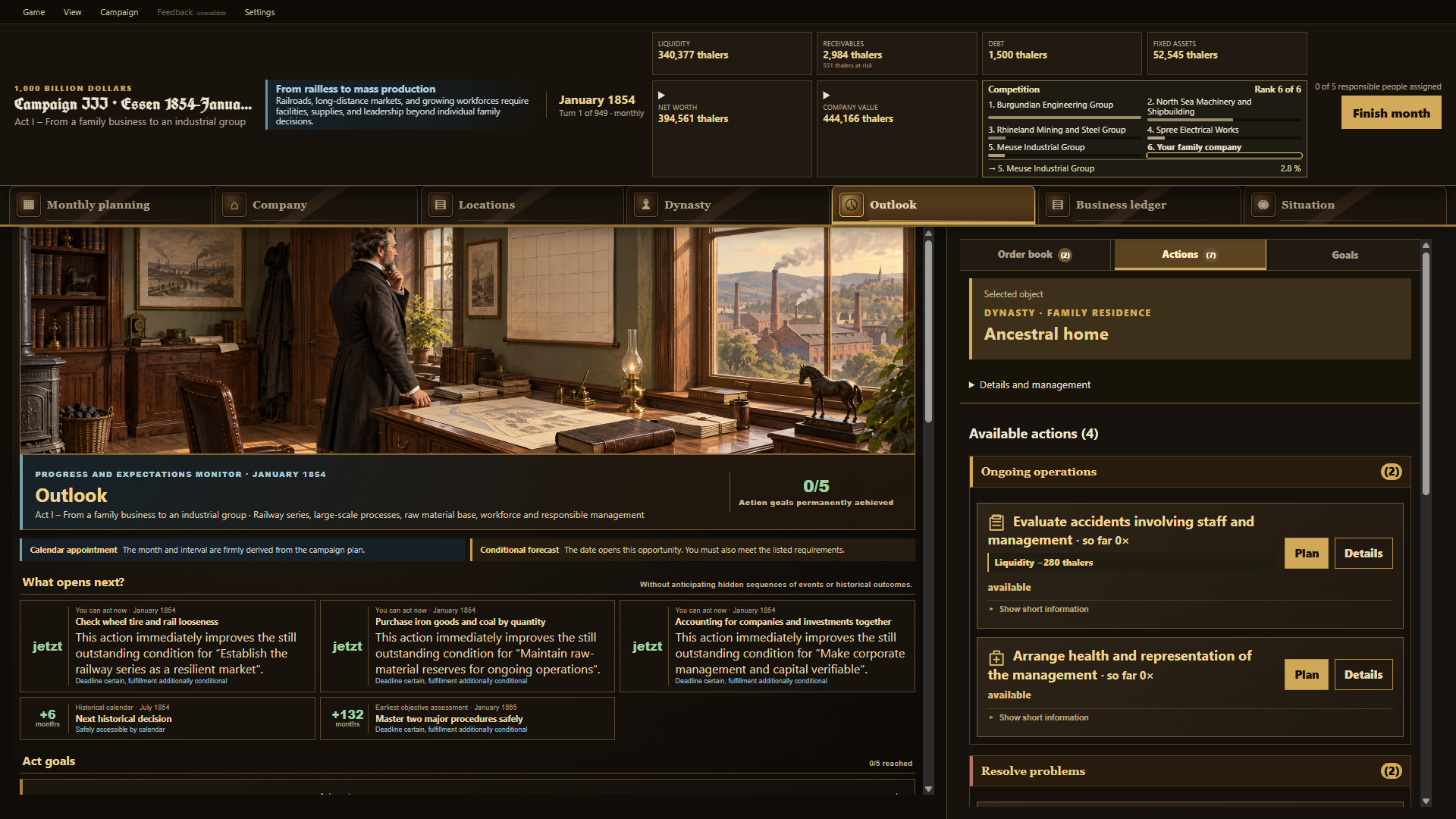
New machinery and additional sites give the family business more room to grow. They also increase the need for materials, staff and capital. Building an industrial group means deciding which operations to expand and which projects must wait. The family’s abilities, and the way it shares management responsibilities, help determine what the company can take on.
1865
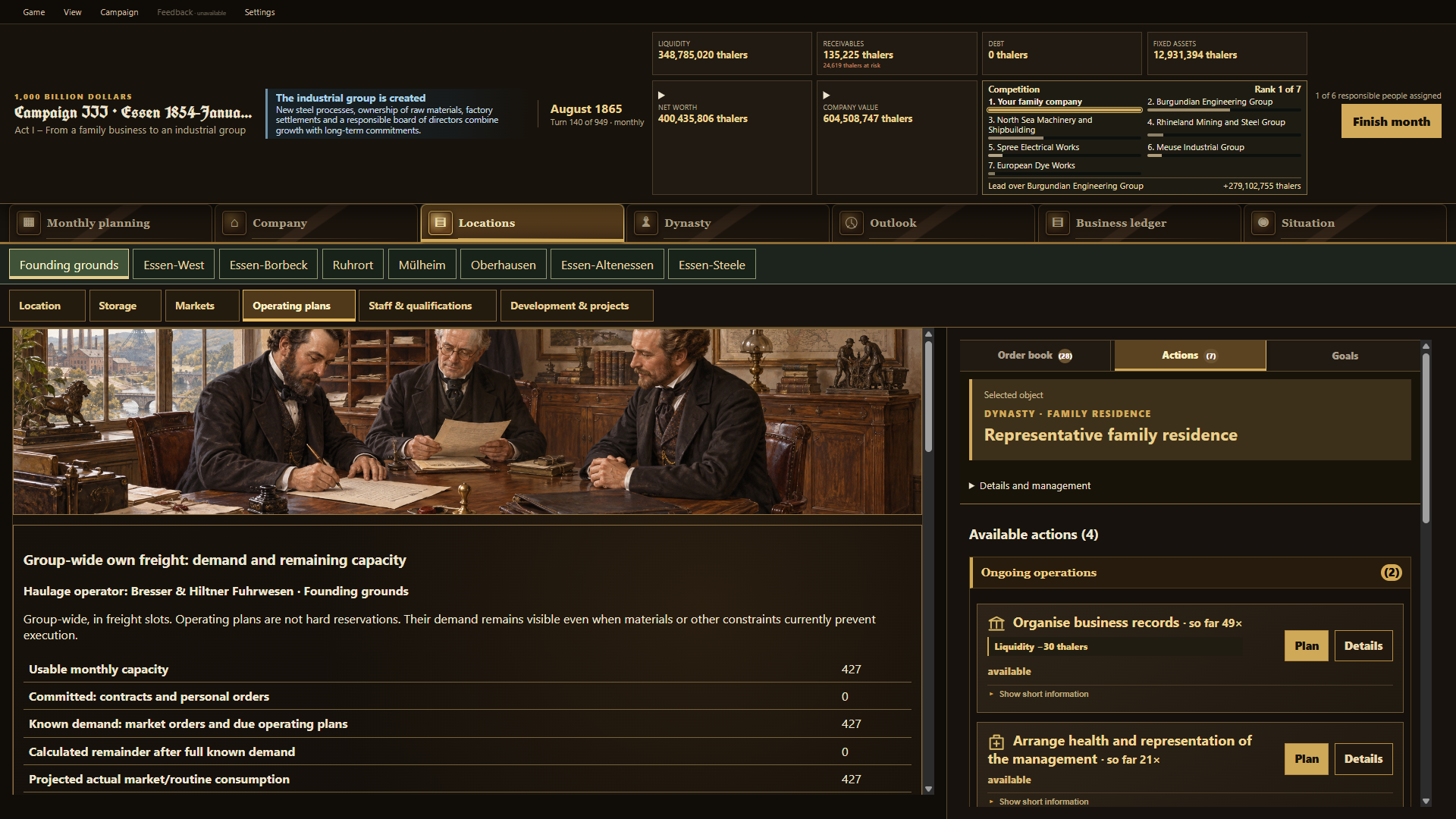
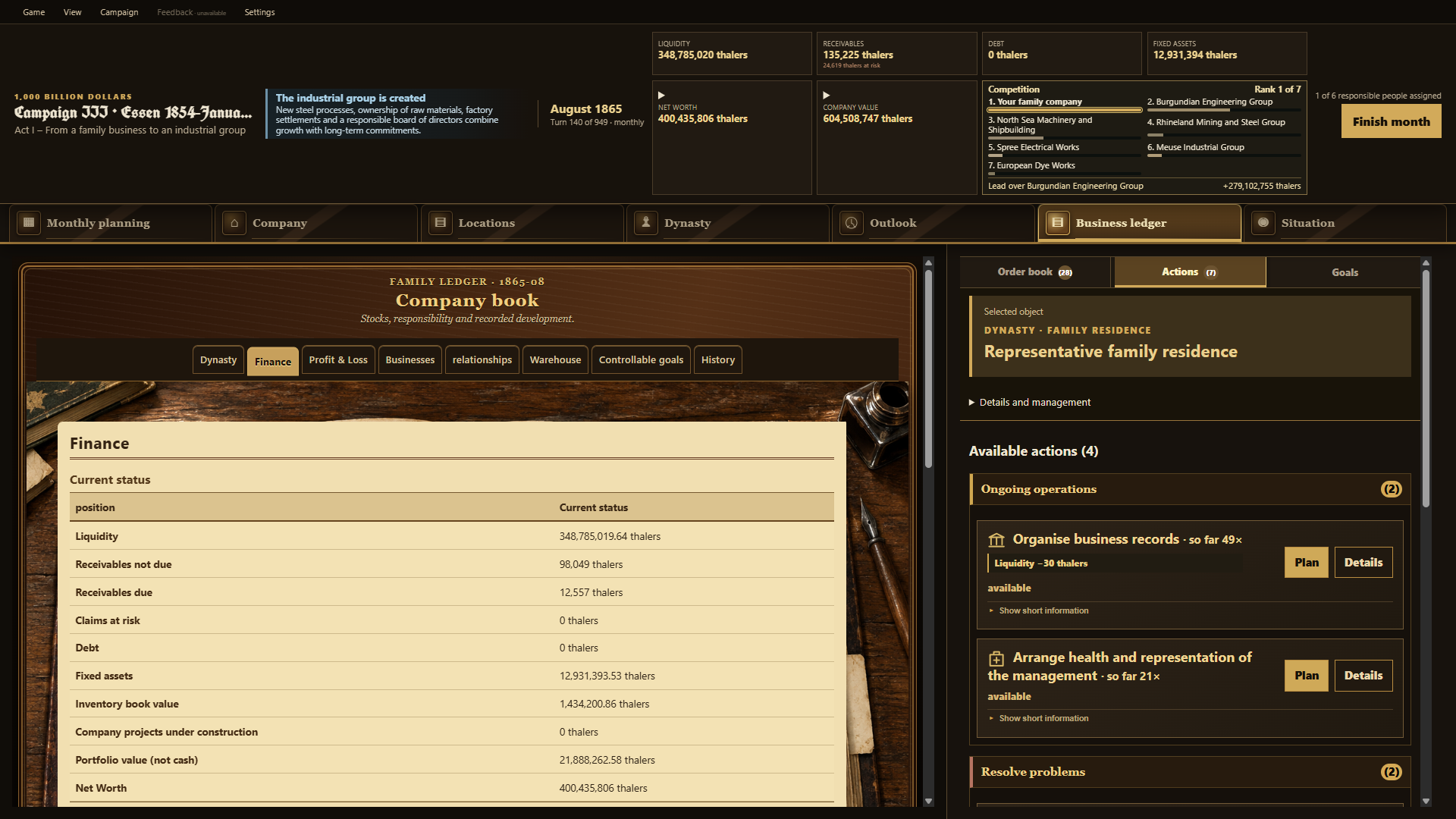
Planning the month ahead
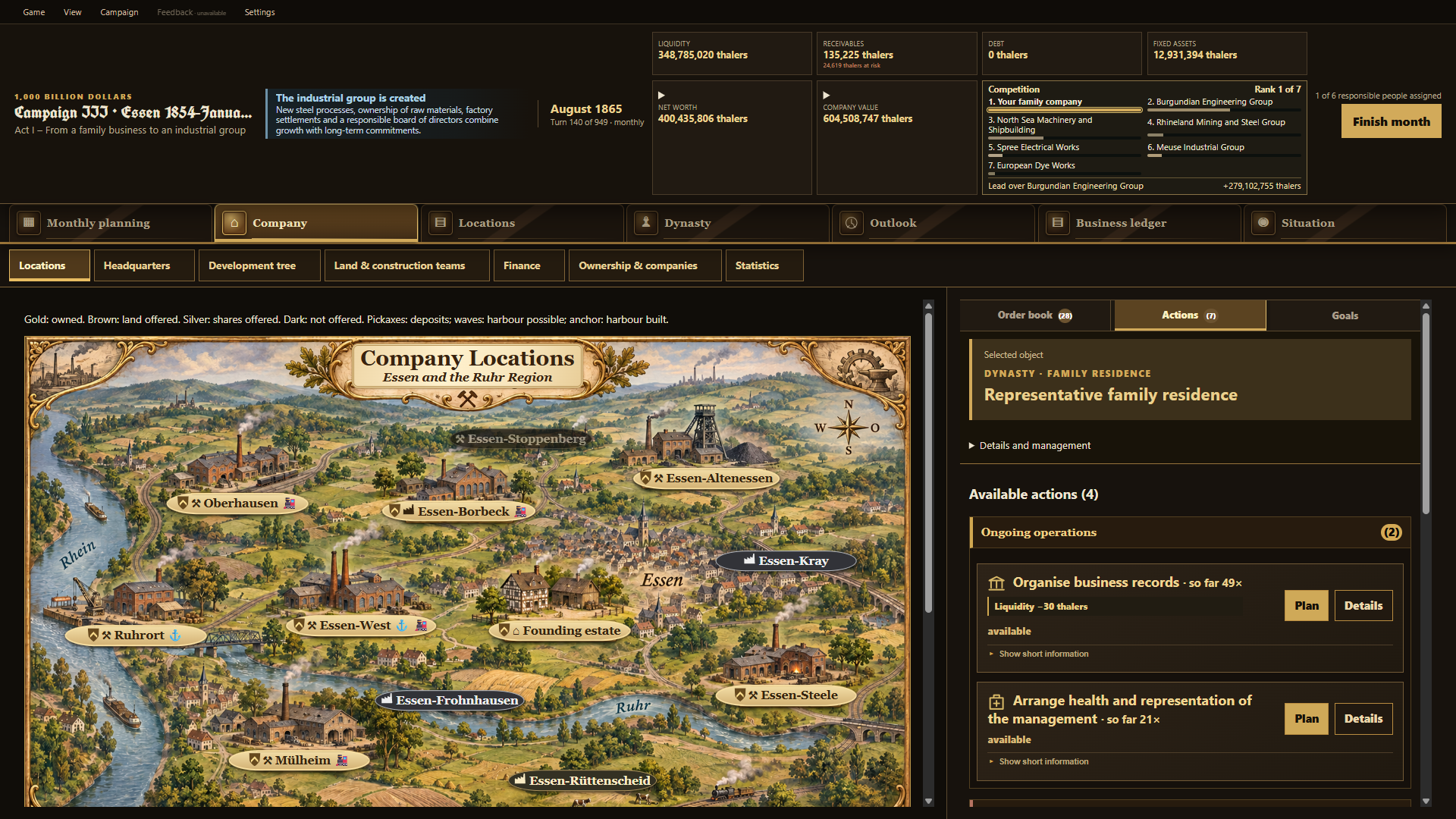
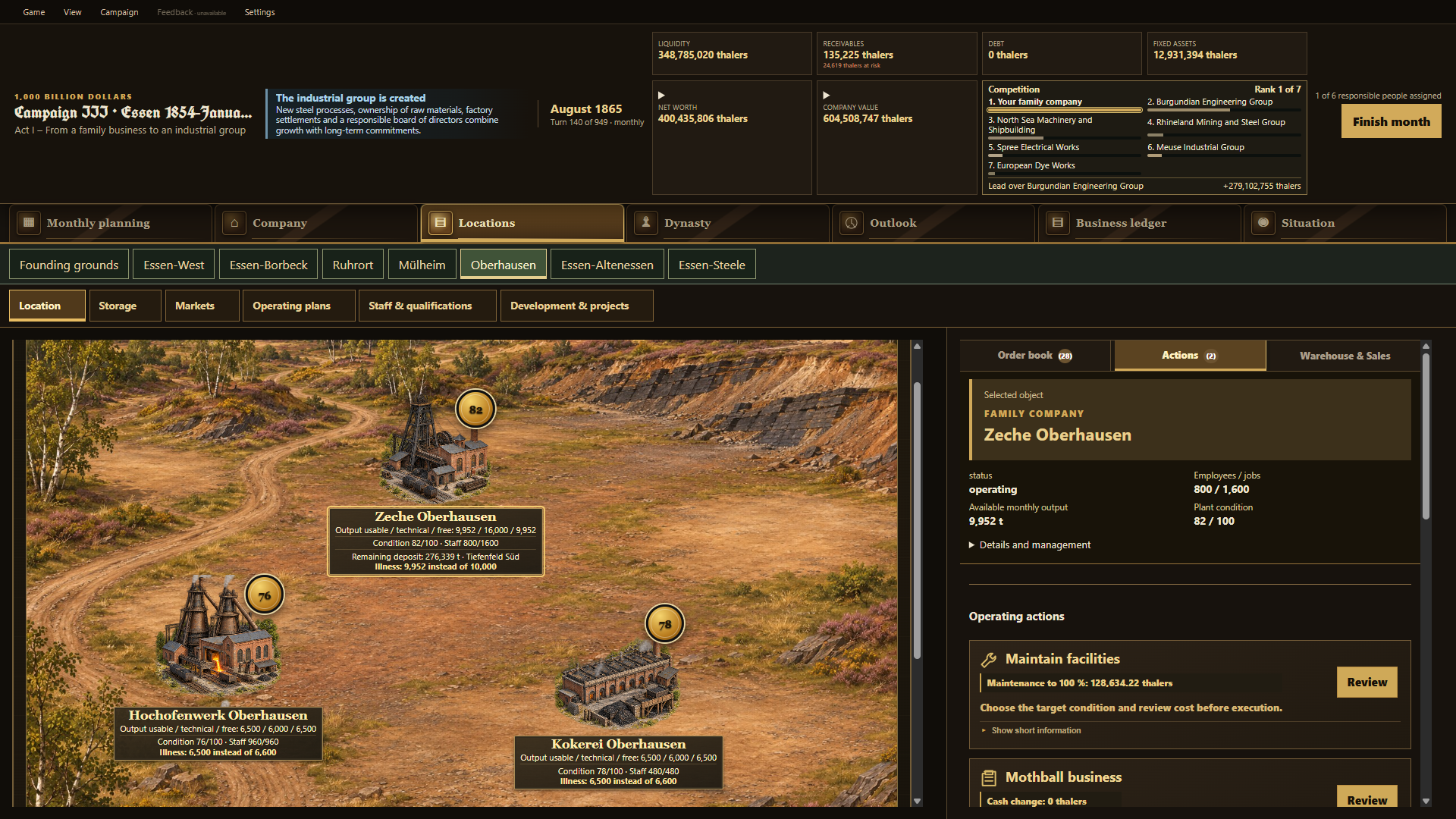
Oberhausen, 1865. A coal mine, a coking plant and a blast furnace share a site. Each operation has its own workforce, output and maintenance needs. Plans for the month ahead must account for materials, transport capacity and cash. What is already in stock, which deliveries are due, and which expenses must be paid? Operating plans and the business ledger help bring these decisions together.
1872
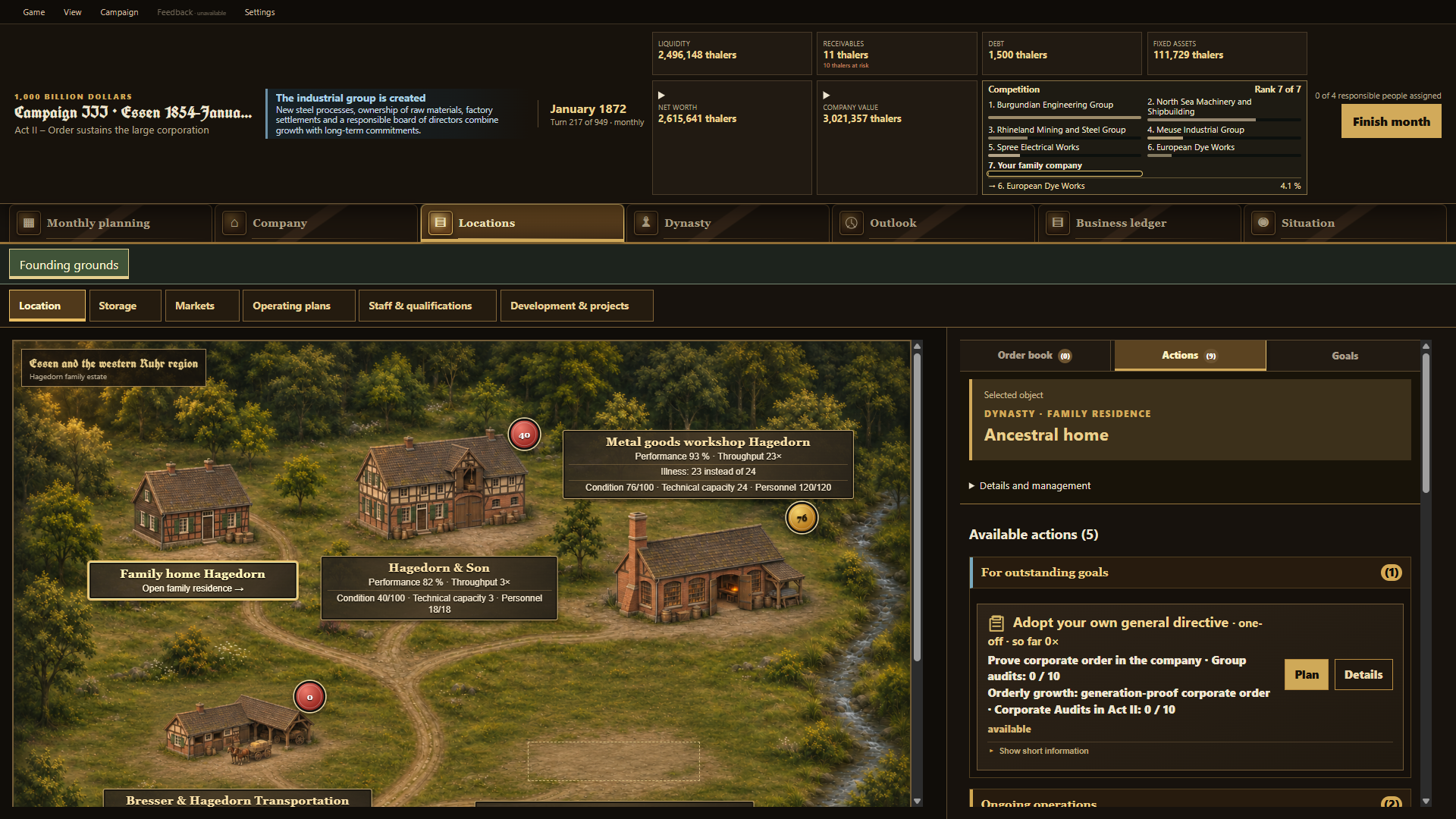
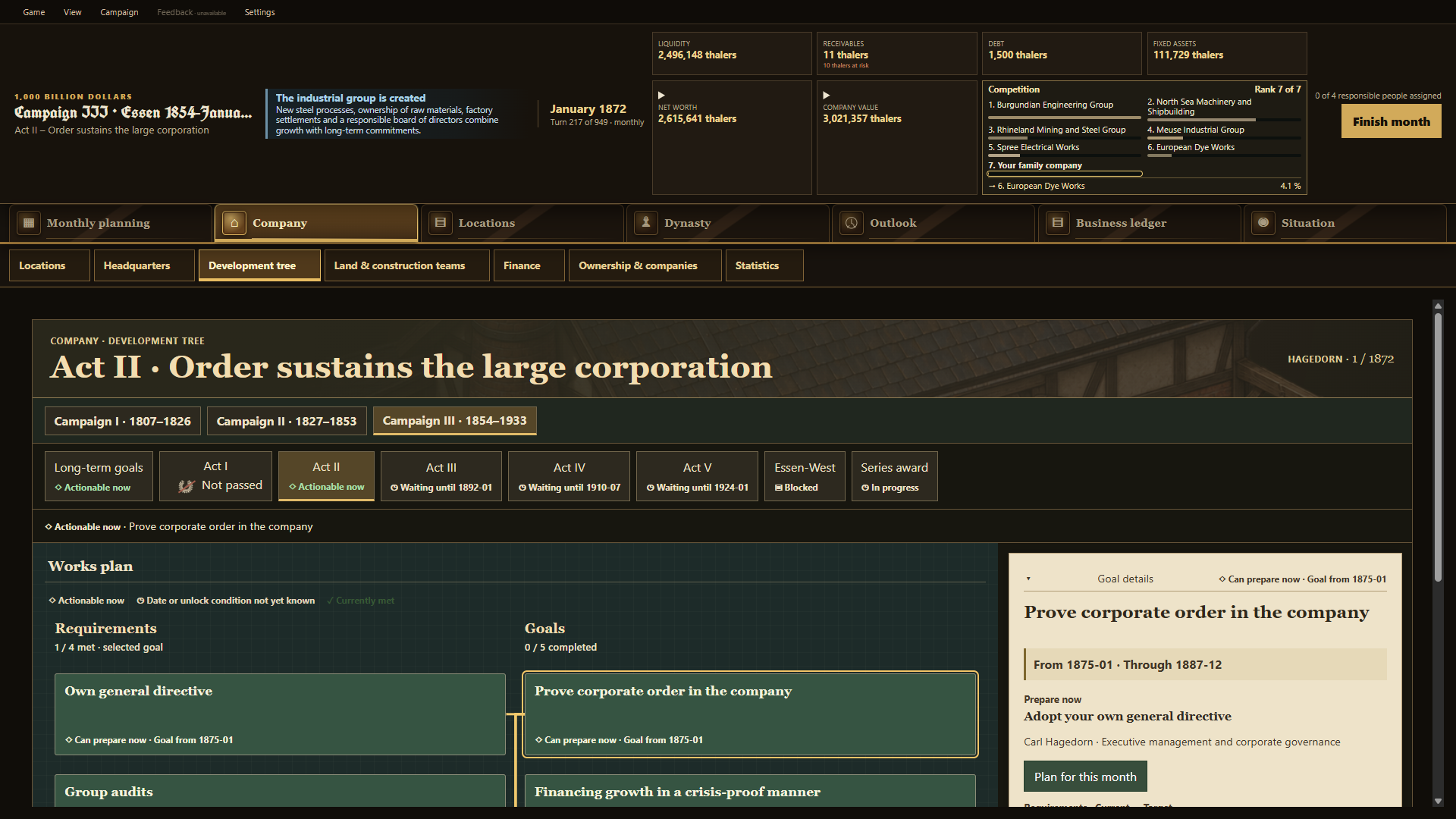
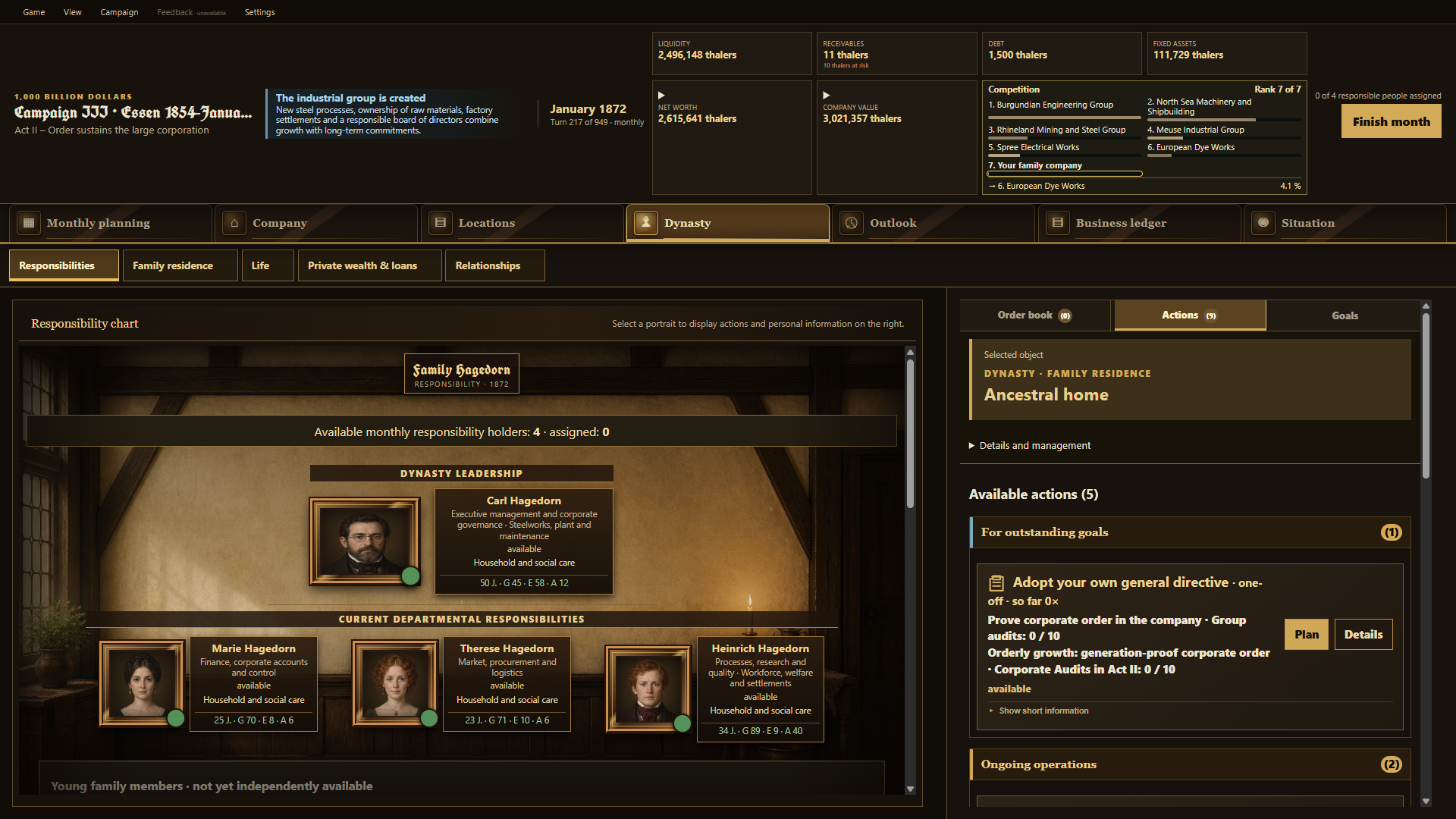
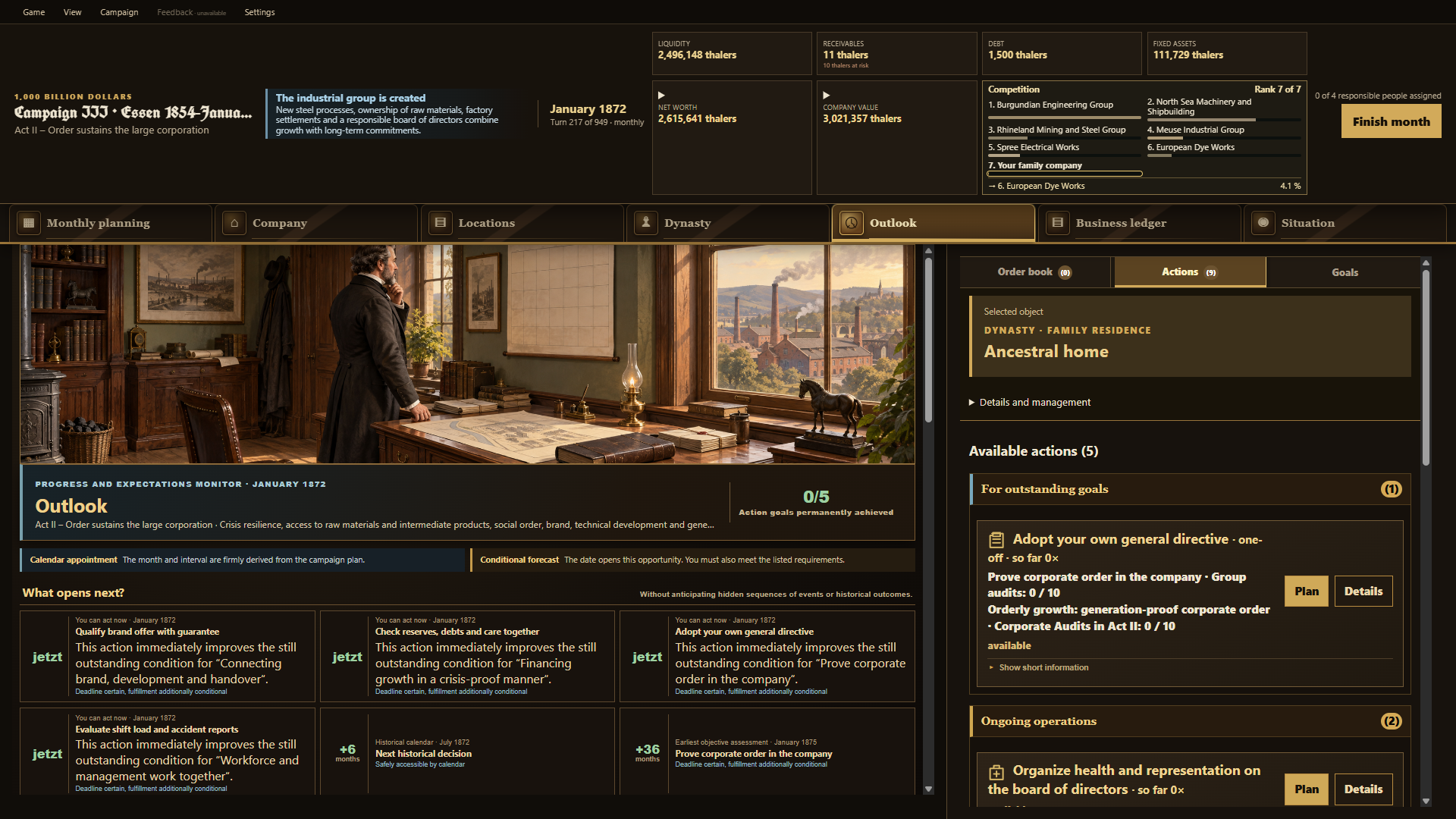
Running a growing company
Several sites bring more work to coordinate. Orders and investment plans need to be coordinated with the managers available to oversee the work. Operating plans organise recurring work, while larger projects need clear priorities. The family’s role changes too: responsibilities must be shared, and the next generation needs to be prepared for its part in the business.
1903
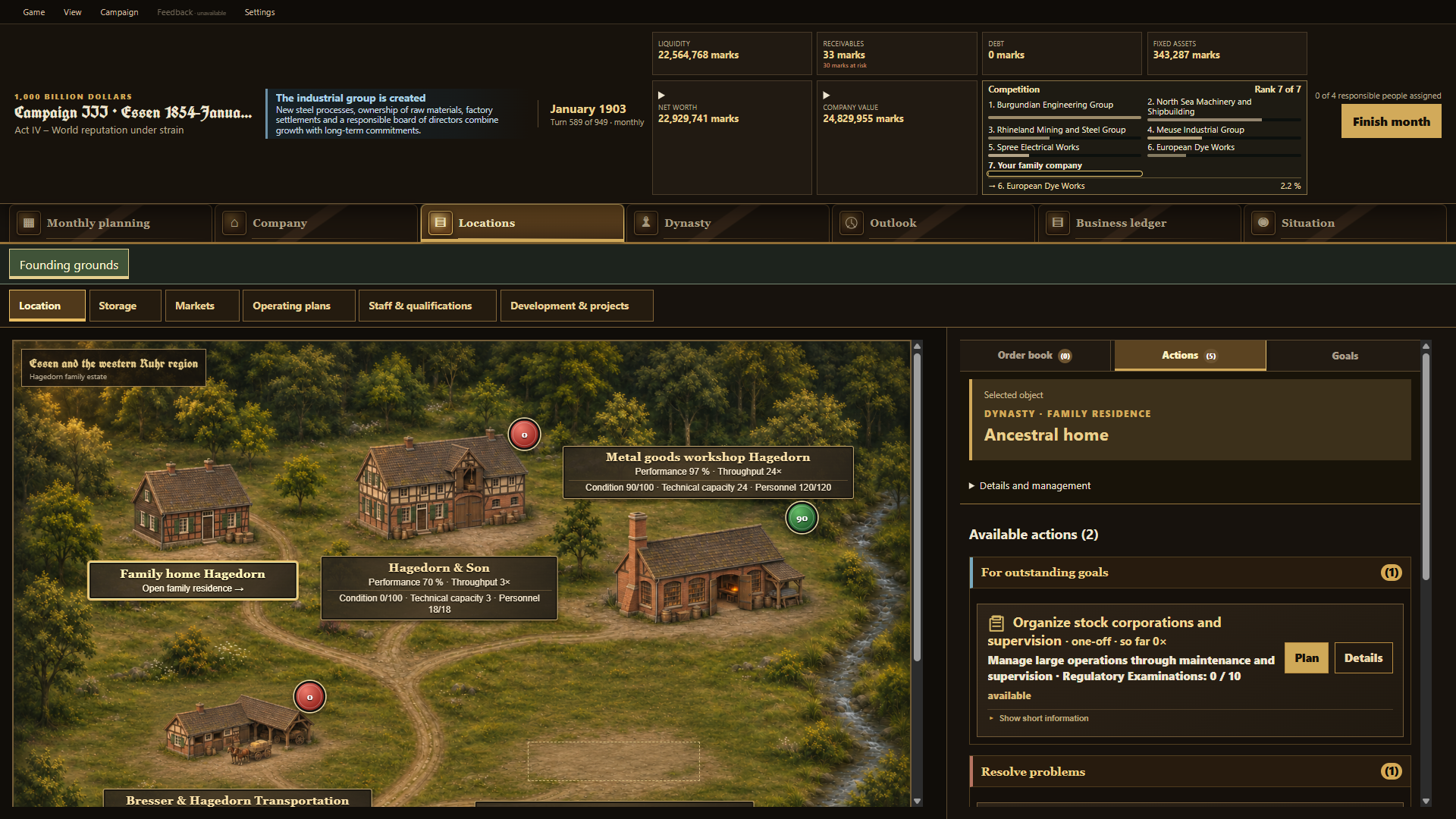
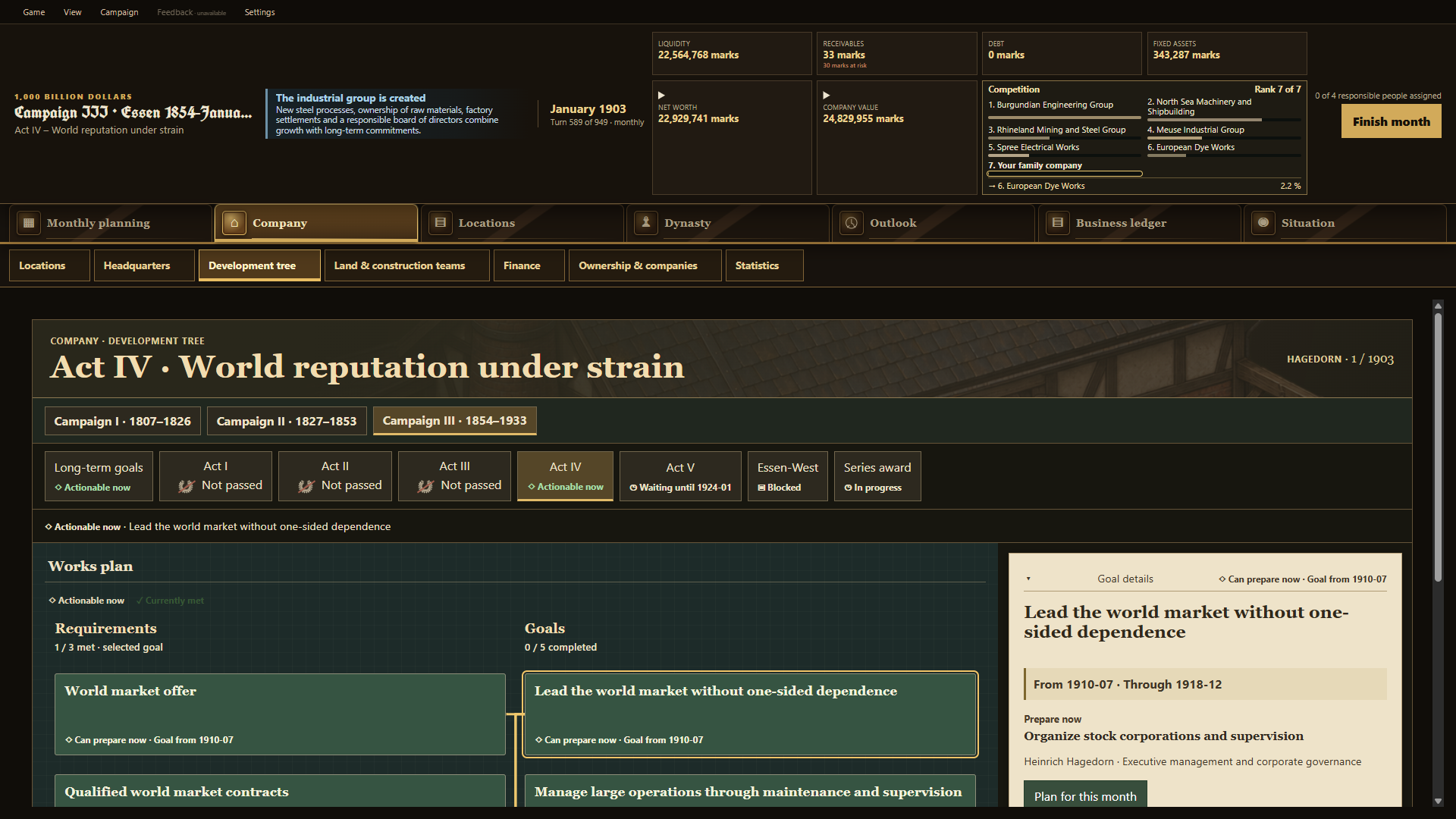
Planning for the long term
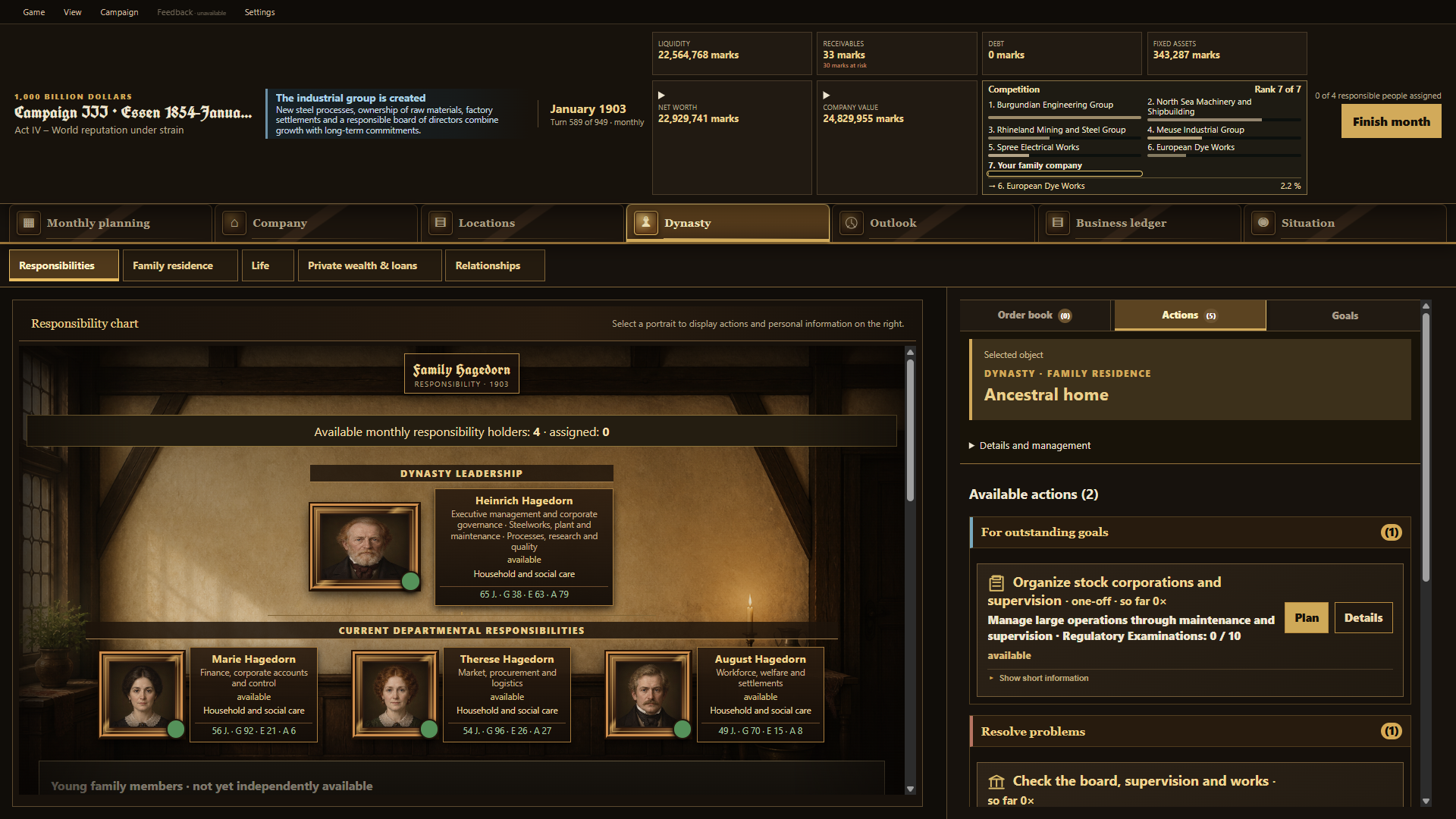
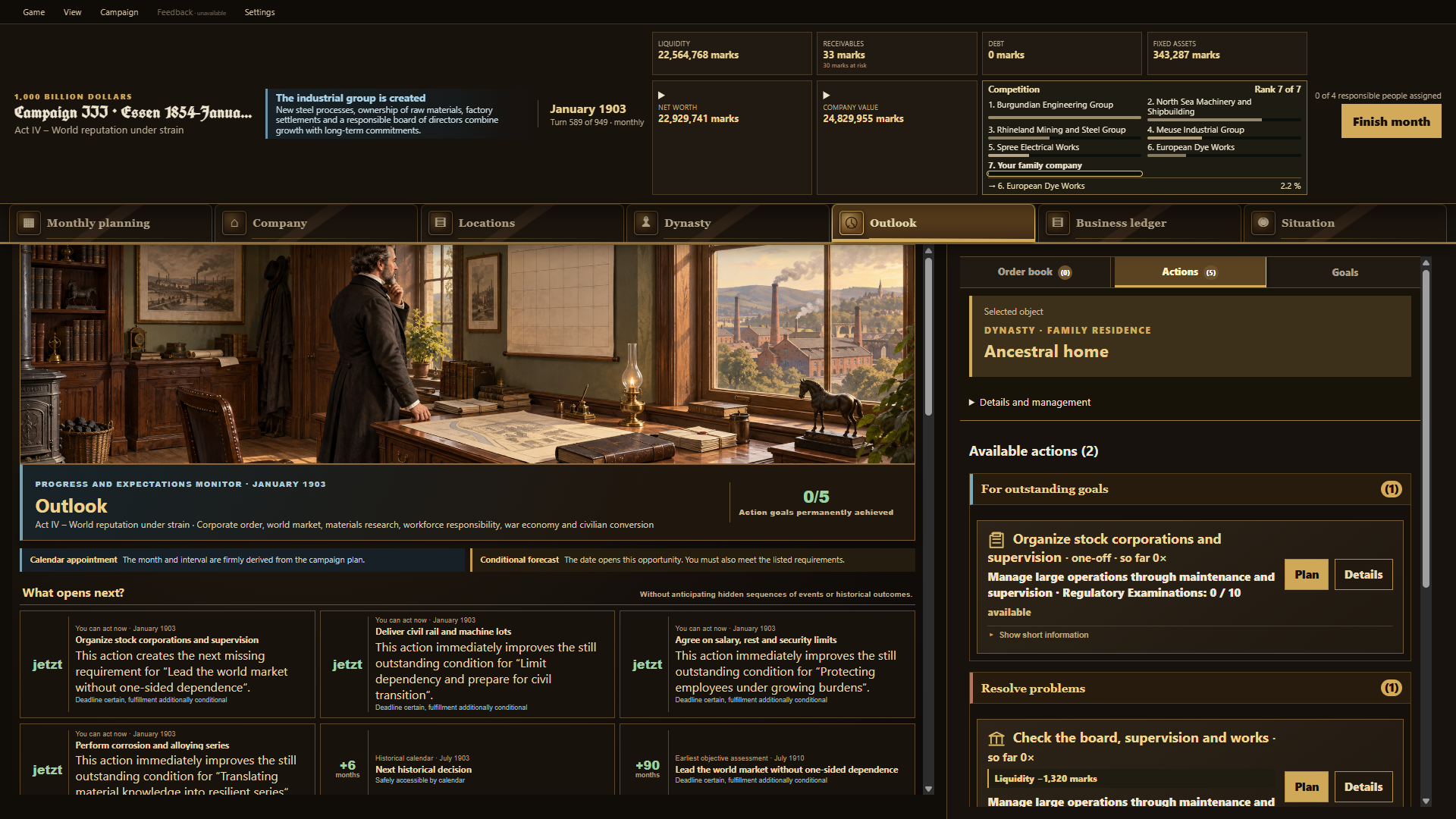
New technologies create opportunities, while plants already in operation still need maintenance. Investment ties up capital; current orders need materials, workers and transport. Long-term planning also means looking at the people who lead the company. Experience and responsibility must pass to new hands if the business is to continue under the next generation of management.
1919
Facing changed circumstances
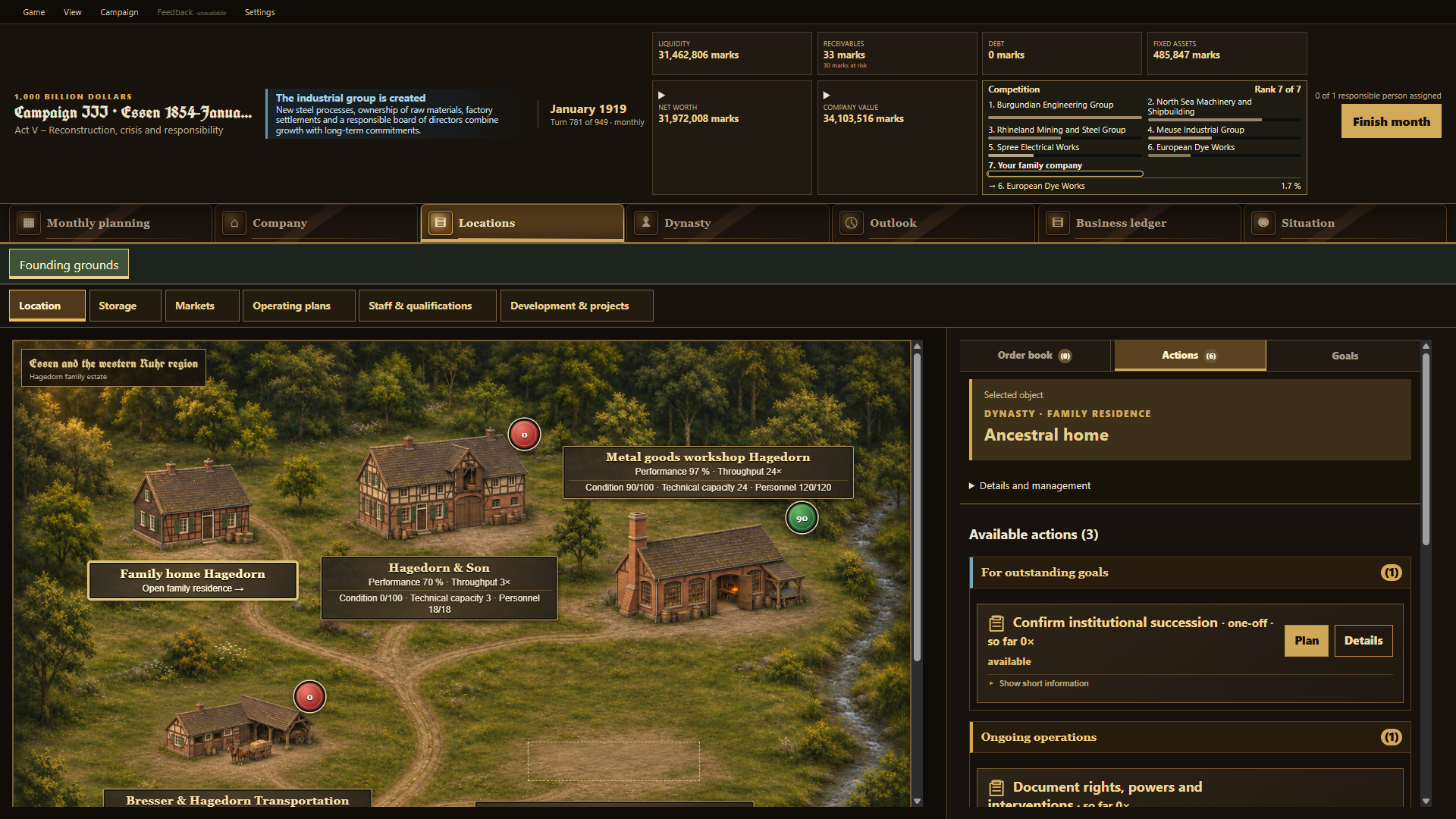
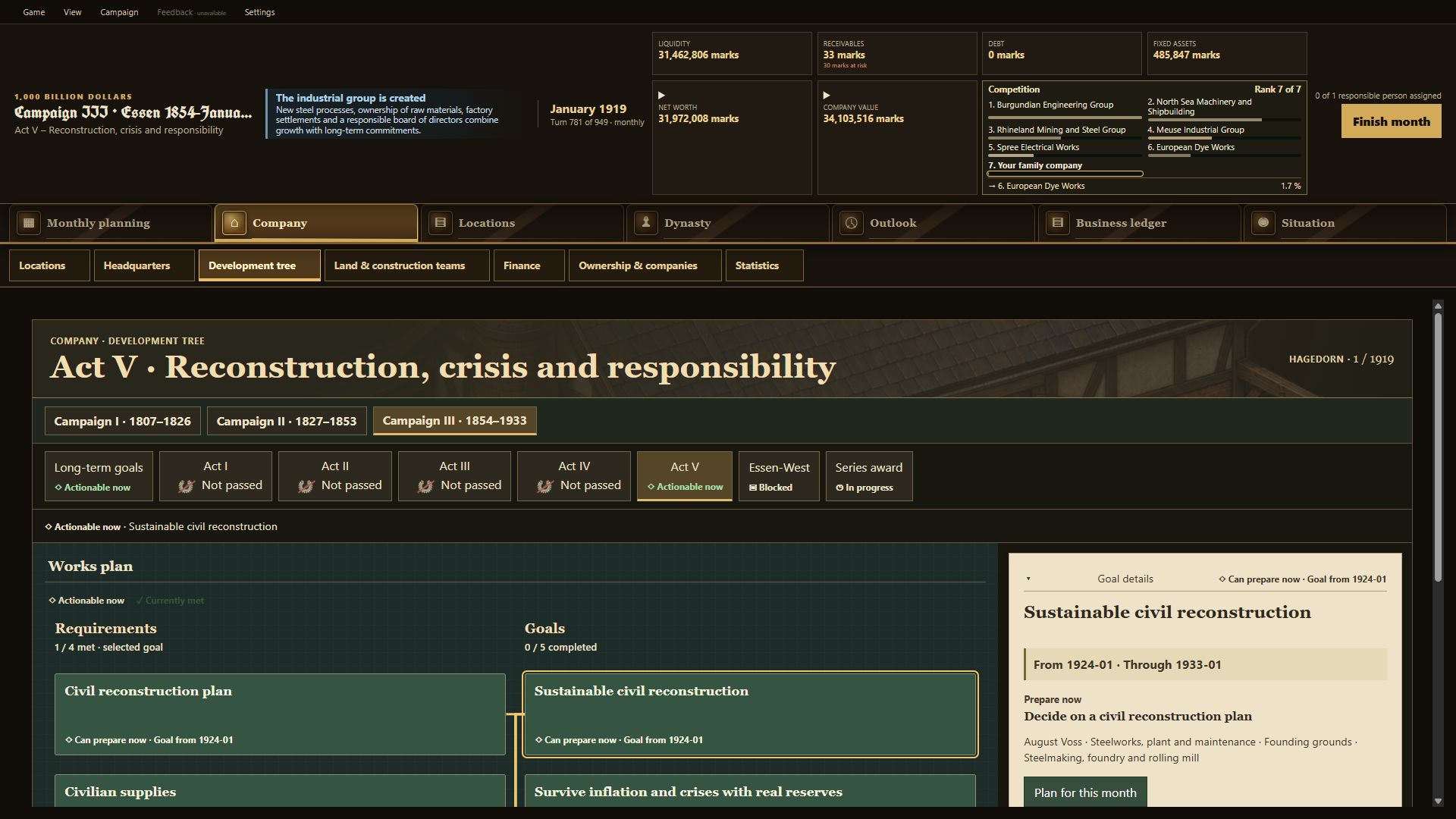
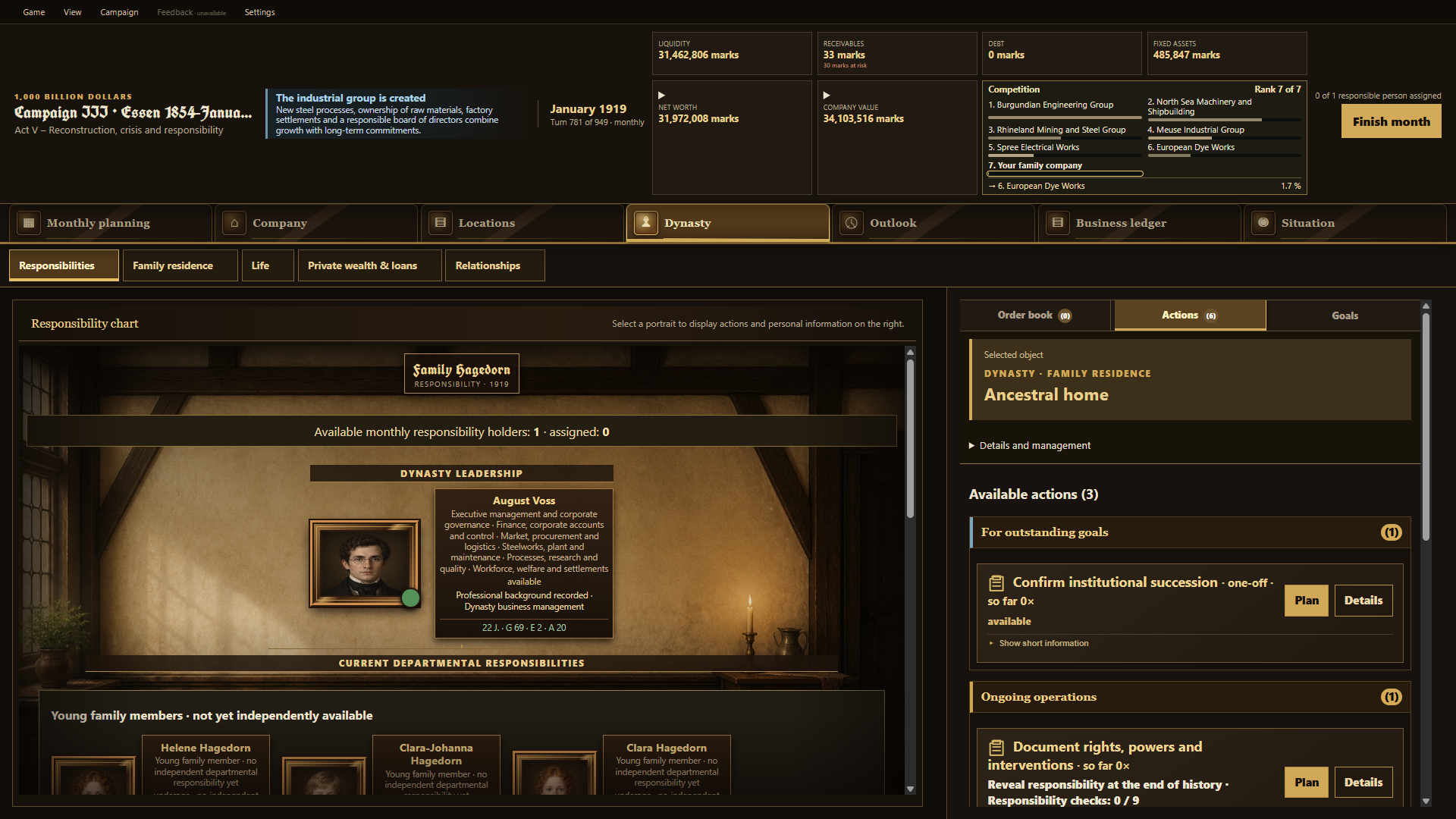
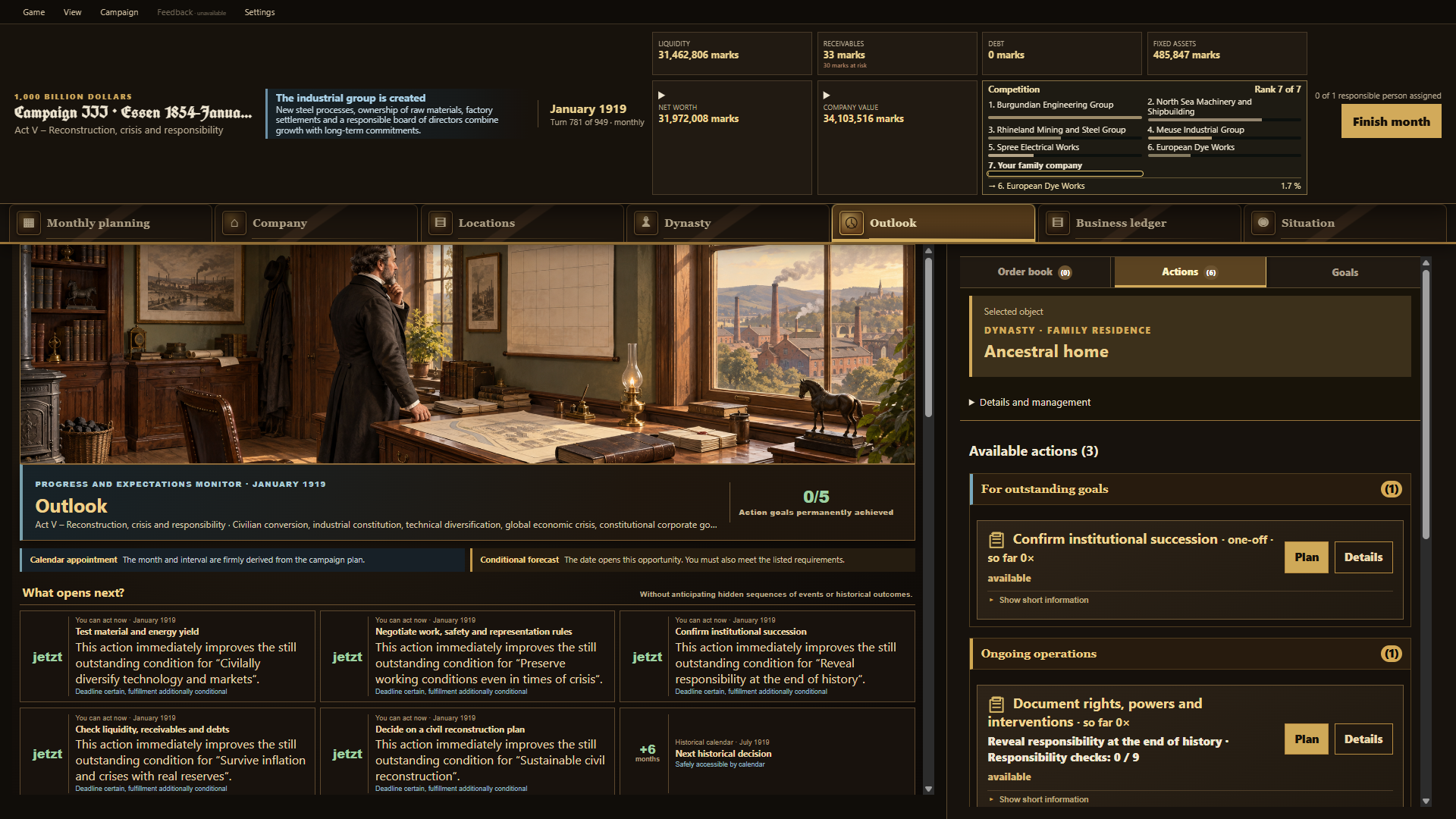
After the First World War, the years ahead bring political change and economic uncertainty. In the game, civilian reconstruction, financial reserves and responsibility for the business move to the fore. Orders, investment and plant maintenance need to be weighed again. The family continues to lead the company as the conditions around it change once more.
1933
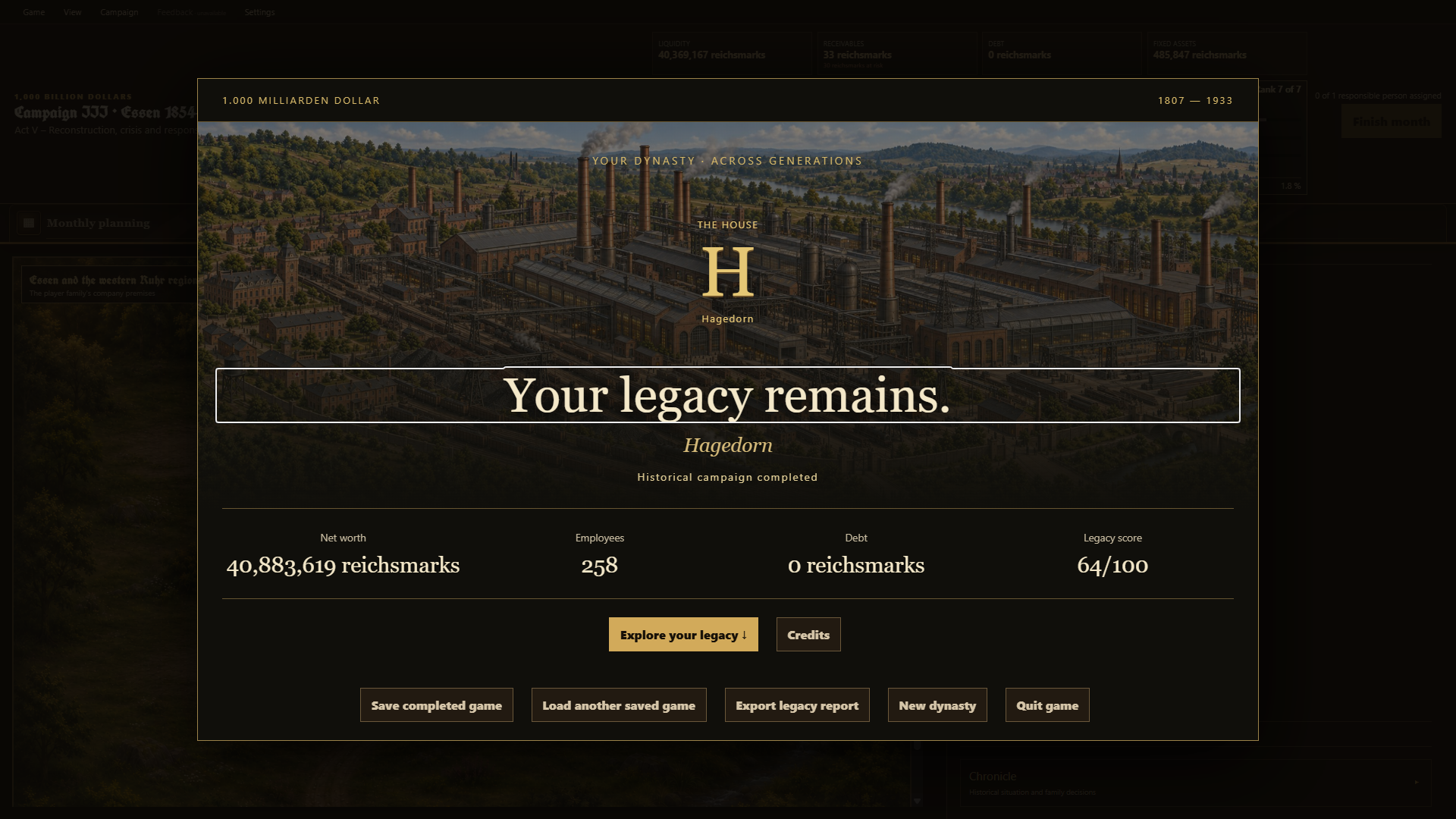
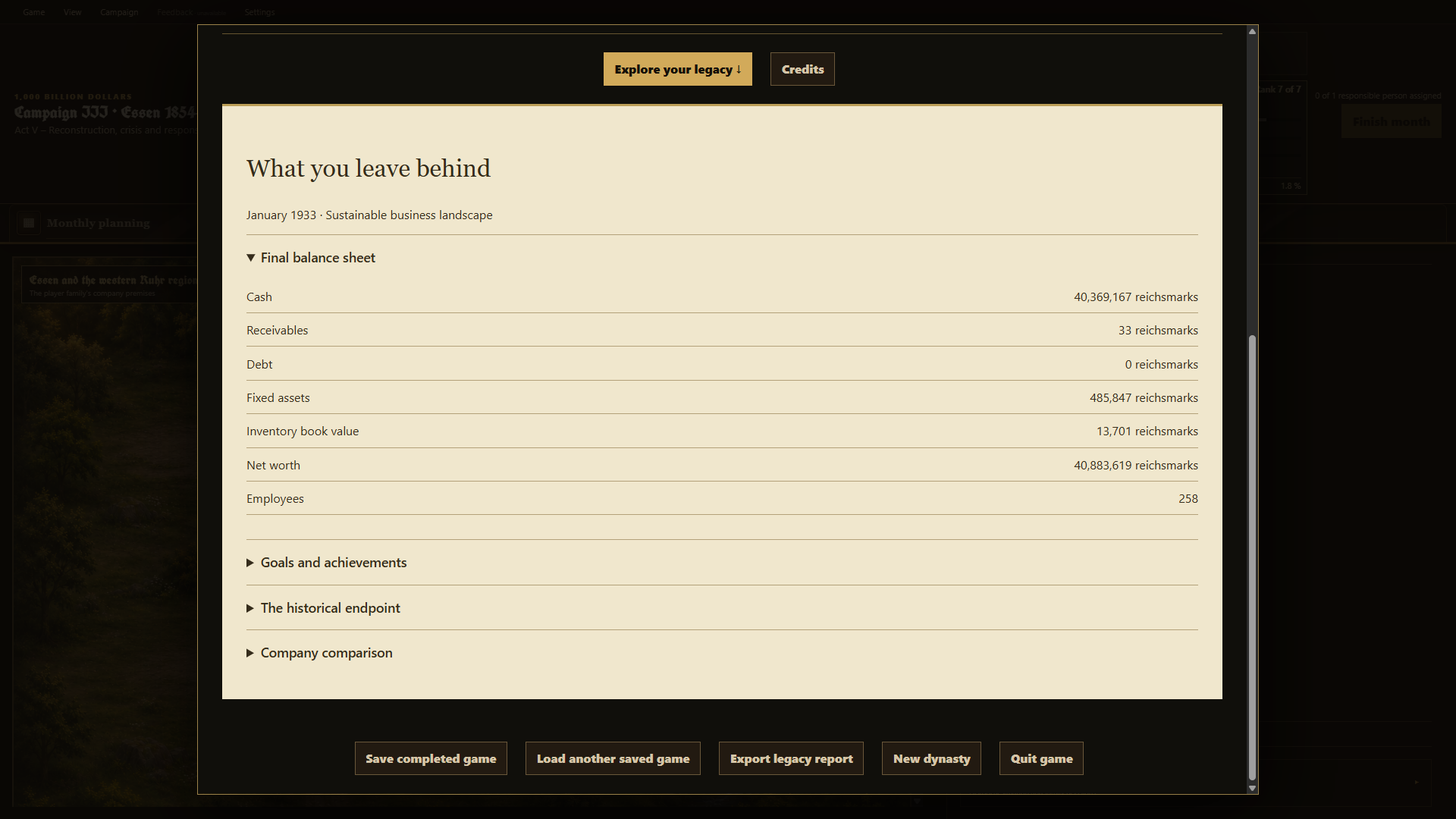
The legacy
January 1933 marks the end of the three campaigns’ timeline. The closing screens bring together what the family has built and the wealth it leaves behind. They connect the financial results with a long sequence of decisions about businesses, investment and responsibility. How that story ends depends on the course of the player’s own game.